A Series
A promise made on a rooftop. A girl built to keep a secret the world was never supposed to survive. June and Ivy, before everything, and after.
Begin ReadingCast
Ivy17
Dark, tousled hair, a small crescent scar over one eyebrow, and eyes that spend most of their time laughing at people. She never takes anything seriously until she suddenly does. Quick with a joke, quicker to dare you into something reckless, and effortlessly liked by everyone she meets. Underneath the grin, there's something she doesn't let anyone get close enough to ask about.
June17
Neat hair pulled back, calm and watchful, always standing a little straighter than the room asks for. Meticulous to a fault, and allergic to breaking a promise once she's made one. She's the one keeping Ivy from doing anything actually insane, most of the time. Calmer than she looks, and more worried than she'll ever admit.
Part One — DiscoveryCh. 01–07
Part Two — DescentCh. 08–14
Part Three — ReckoningCh. 15–21
Chapters One through Three are declassified and free to read. The rest of Volume One unlocks episode by episode on TikTok.
Chapter One
Morning light came through the classroom windows in long gold bars, catching chalk dust in the air and turning it briefly beautiful before it settled. Outside, the ordinary noise of a campus getting through Tuesday drifted up through the glass: bicycles ticking past the gate, a coach's whistle somewhere near the track, a knot of students arguing cheerfully about whose turn it was to buy lunch.
Inside Classroom 2-A, the only sound that mattered was smaller than all of that.
Scratch. Scratch.
June's pencil moved across her notebook in perfectly ruled lines, every heading underlined twice, every margin exactly the width she'd decided margins should be in the sixth grade and never revisited since. Classmates joked, not unkindly, that if the school ever lost its own lesson plans, June's notebook could probably reconstruct the semester from memory.
Across the aisle, Ivy wasn't taking notes at all.
She had her chin propped on her folded arms, watching June with the specific, unhurried attention of someone who found her far more interesting than any lesson currently being taught. A slow smile built at the corner of her mouth, the kind that always meant trouble for whoever noticed it first.
"Do you ever get tired," Ivy said, low enough for just the two of them, "of being the only person in this room who actually knows what a subjunctive clause is?"
"Do you ever get tired," June said, without looking up, "of clearly knowing what one is too, and refusing to admit it so you have an excuse to bother me instead?"
Ivy pressed a hand to her chest like she'd been shot. "That's slander."
"It's Tuesday."
"That's not a defense."
"It didn't need to be one."
A couple of students nearby laughed under their breath and went back to their own conversations. Up front, the teacher kept filling the whiteboard with a formula nobody in the back row was going to remember past the final bell.
Ivy leaned in, voice dropping further, almost fond. "You know you're going to burn out eventually. All this—" she gestured, vaguely, at June's notebook, the aligned pencils, the entire architecture of June's existence "—it has a shelf life."
"I'll be fine."
"That's what everyone says right before they very much aren't."
For just a second, June looked up from the page, and something in Ivy's expression didn't match the joke. It was there and gone so fast June almost decided she'd imagined it — a flicker of something old and tired behind eyes that spent most of their time laughing at people. Then it was buried again under the same easy grin Ivy wore for the entire rest of the world.
"Anyway," Ivy said, like she hadn't just let something slip. "What would I even do without you to worry about."
"Find someone else to be impossible with."
"Nobody else is any fun to be impossible with. You take it so personally."
The bell rang before June could answer that, and the room detonated into its usual chaos — chairs scraping, bags zipping, someone shouting about the cafeteria running out of the good bread again. Ivy was on her feet and slinging her backpack over one shoulder before the sound had even finished ringing.
"Rooftop," she said. Not a question.
"You have class."
"I have a very flexible relationship with class."
"That's not a real thing."
"It should be." Ivy was already backing toward the door. "You'll come anyway."
"I won't."
"You always do."
"I really don't."
"June." Ivy grinned, walking backward now, daring the hallway behind her to get in the way. "I've known you two years. I'm not guessing."
She turned and vanished into the crowd before June could argue further, weaving through students she barely knew and somehow making all of them like her anyway, a joke here, a wave there, none of it costing her any visible effort. June watched her go with the specific, familiar ache of envying a thing you don't actually want, not the attention, just the ease of it, the way Ivy moved through the world like it had already decided to be kind to her.
Then she picked up her bag, and followed. Because she always did.
The rooftop door stuck the way it always did, and gave way all at once, letting in a wind that smelled faintly of rain even though the sky overhead stayed a flat, cloudless blue. The city spread out beyond the school fence in its usual glitter and haze, distant traffic reduced to a soft, directionless hum.
Ivy was already there. Or, more precisely, already on the railing rather than behind it, one foot braced on the ledge like the forty-foot drop below simply hadn't been invited into her calculations.
"You know that's insane," June said, crossing the roof fast.
"So is crossing an intersection. Statistically, way more people die doing that."
"Most people don't do it while sitting on a railing."
"Their loss."
"Get down. Now."
Ivy looked over her shoulder, delighted, the way she always looked when she'd successfully gotten a rise out of June before lunch. "You worry an alarming amount for someone who claims not to like me that much."
"I never said I didn't like you."
"You imply it constantly."
"I imply that you're a menace. That's different."
Ivy laughed, and hopped down anyway, landing lighter than a person her size had any business landing. "There. Are we happy now?"
"Marginally."
They sat side by side against the railing, facing the skyline, close enough that their shoulders nearly touched. For a while neither of them said anything, and the quiet wasn't uncomfortable, it never was between them, the kind of silence that only exists between two people who've long since run out of anything they need to fill it with.
Ivy broke it first, which she almost always did.
"You came."
"I said I would."
"You could've changed your mind. People do that."
"I don't." June glanced sideways at her. "I don't really know how to. Once I've said I'll do a thing, it just... happens. It's not a virtue. It's closer to a design flaw."
Something shifted in Ivy's face at that, quick, unreadable, gone again before June could name it.
"What if," Ivy said slowly, looking out at the skyline instead of at June, "one day I just... disappeared."
June frowned. "Disappeared where."
"I don't know. Anywhere. Nowhere." Ivy's voice had lost its usual teasing lift. "People do, sometimes. Just stop being somewhere they were."
"That's not how people work."
"You'd be surprised."
There was something underneath the words that June couldn't place, something that sounded less like a hypothetical and more like Ivy already half believed it, the way you believe a diagnosis before you've fully been told what it means.
June turned to face her fully.
"Then I'll find you," she said, no hesitation in it at all, because there wasn't any to have. "Wherever you go. I'll keep looking until I do."
Ivy looked at her for a long moment, the wind pulling a dark strand of hair loose across her face, and when she smiled this time it wasn't the performance she gave the rest of the school. It was smaller. Realer.
"...You promise?"
"I always keep my promises." June said it the way she said everything true, plainly, like stating a fact about the weather. "You know that about me."
Ivy didn't answer right away. She looked out at the city a while longer, and when she finally spoke, it came out so quiet the wind nearly took it before June could catch it at all.
"I hope you never have to."
June didn't understand what she meant by that, not then, and told herself it didn't matter, and smiled anyway, because whatever Ivy needed in that moment, a smile seemed like the safest thing she had to give her.
Neither of them knew that before the sun went down, there would be blood in the grass at the edge of the school grounds.
Neither of them knew that a single promise, made lightly on a rooftop on an unremarkable Tuesday, was about to become the thing that broke them both.
Chapter Two
The afternoon lesson dissolved into the usual haze of chalk dust and half-attention, the kind of hour that existed mostly to be endured rather than remembered. At the front of the room the teacher filled another whiteboard with careful rows of numbers, and pens scratched to keep pace before the eraser could take it all back.
June barely looked up. She'd already reorganized the day's notes into something cleaner than what had actually been said aloud.
Beside her, Ivy wasn't pretending to work at all.
She sat with her attention fixed out the window, and it wasn't the loose, drifting kind of not-paying-attention June was used to. It was focused. Deliberate. The particular stillness of someone tracking something rather than daydreaming past it.
Beyond the glass, the courtyard looked exactly as unremarkable as it always did at two in the afternoon — students cutting between buildings, a teacher lingering under the trees with a coffee she'd clearly smuggled past the front office, the groundskeeper working a hose along the flowerbeds with the resigned patience of a man who'd had this exact job for decades.
Ivy's eyes stayed on the tree line at the far fence and didn't move.
"Ivy."
She blinked, coming back to herself half a second too slowly.
"You're doing it again," June said, low enough not to draw the teacher's attention.
"Doing what?"
"That. The window thing."
A faint smile. "I thought I saw something."
"Where?"
"There." Ivy tipped her chin toward the fence line without quite pointing. "By the trees."
June followed the gesture and found nothing but leaves stirring in an ordinary breeze.
"There's nothing there."
"...Yeah." Ivy looked away first, which she almost never did. "Probably nothing."
The teacher clapped once for attention, and June let it go, on the surface at least. Underneath, something small and persistent kept scratching at her: Ivy didn't lose focus. She skipped class, she teased, she made a habit out of not caring about half the things she was supposed to care about, but when something actually caught her attention, it was never for nothing.
Ten minutes later, a sound drifted in from the hallway.
Metal. Faint. Almost like something dragging slowly along a locker door.
June's head came up. "Did you hear that?"
A couple of students glanced toward the door out of idle curiosity before returning to their notes. The teacher didn't so much as pause his lecture.
Ivy went very still.
"No," she said.
Too fast. Too clean, the way an answer only sounds when someone's decided in advance exactly how much of the truth they're willing to hand over.
June frowned at her, certain — not guessing, certain — that Ivy had heard exactly what she had.
The bell rang before she could push it, and the room broke apart into its usual noise. June zipped her bag shut and glanced over.
"Coming?"
"In a minute."
"You said that yesterday."
"And I showed up eventually."
"Eventually," June repeated, and stepped out into the hallway without her.
The corridor was its usual controlled chaos — backpacks, raised voices, someone sprinting past a teacher who didn't even look up to scold them. It felt, for about ten seconds, like an entirely ordinary end to an entirely ordinary day.
Then the crowd in front of her slowed, and the noise thinned into whispering.
Near the lockers stood a man June had never seen before. His clothes looked slept in rather than worn. Dark circles sat under eyes that hadn't rested properly in some time, and his arms were wrapped around a thick folder held tightly enough to whiten his knuckles.
A teacher stood in front of him, polite in the specific, strained way people are polite to something they'd rather not deal with. "Sir, this area's restricted to staff and students."
"I know." His voice came out low, almost apologetic. "I just need to find someone."
His gaze moved down the hallway, one face at a time, methodical, searching.
Then it stopped.
For one full second, something shifted across his features that wasn't relief, wasn't recognition. It was fear, plain and total, gone again almost before June could be sure she'd seen it.
"...Someone," he repeated, softer, like he was correcting a mistake he'd just made out loud.
June glanced sideways at Ivy, expecting confusion, curiosity, anything at all.
What she got instead was a smile. The ordinary one. The one Ivy handed out to strangers and teachers and everyone else who didn't get the real version.
"Not a student," Ivy murmured.
"How would you even know that."
"He looks—" Ivy tilted her head, considering the word like she was choosing it off a shelf. "Lost. Badly. The specific kind of lost where you've stopped hoping to be found and started hoping to be forgotten instead."
Before June could ask what that meant, the teachers began steering students around the man, calling for everyone to keep moving. The crowd obeyed, sluggish and curious, and June took several steps before realizing Ivy hadn't moved with her.
She turned back.
Ivy was still watching the stranger, and the smile had gone somewhere June couldn't follow. For a moment her face held nothing at all — not warmth, not curiosity, nothing June had a name for.
Then the man looked back at her, and whatever color remained in his face drained out of it entirely. He took a step backward, involuntary, the kind of retreat a body makes before the mind has agreed to it, as if simply being near Ivy had become the most dangerous part of his day.
"Ivy?"
The warmth came back into her expression as easily as it always did, like a light switching on in an empty room.
"Hm?"
"You coming or not?"
She blinked, smiled, fell into step beside June like nothing at all had just happened between her and a total stranger. "Guess today's not going to be boring."
"You say that like it's good news."
"It usually is."
June wanted to laugh at that. Instead she glanced back over her shoulder, once, and found the man still rooted exactly where they'd left him, watching the two of them disappear into the crowd with the fixed, hollow attention of someone memorizing a face he expected never to see again.
She didn't know why, but some small, unexamined part of her understood, watching him watch them, that an entirely ordinary school day had just quietly closed the door behind it.
Chapter Three
The hallway had emptied faster than either of them expected, the ordinary lunchtime stampede thinning the corridor down to the occasional door swinging shut somewhere out of sight.
"Where did everyone go," June asked.
"Food." Ivy had her hands shoved in her hoodie pocket, unbothered. "People move remarkably fast when a cafeteria's involved. It's the one thing that reliably outruns a bell."
June allowed herself a small smile and let it drop as they reached the stairwell, because something about the quiet had started to feel less like lunch hour and more like held breath.
Then came the footsteps.
Fast. Uneven. Someone running like the running itself was the only plan they had left.
The emergency door at the end of the hall slammed open, and the stranger from the lockers stumbled through it, one hand braced against the wall, breathing like he'd covered more distance than his body wanted to give him credit for. His shirt clung to him with sweat. His eyes swept the corridor in wide, frantic arcs, the look of a man convinced something was still gaining on him.
Then he saw Ivy, and stopped moving altogether.
"No." The word barely made it out of him.
June stepped forward on instinct. "Sir, are you—"
"Stay back." His voice cracked wide open. "You don't understand what she—"
Before he could finish, a sound slid down the corridor toward them, unhurried, deliberate.
Scratch. Scratch.
Like nails dragging across concrete with all the time in the world.
Every hair on June's arms lifted at once. "Did you hear that?"
Ivy had gone perfectly still beside her, and for once she didn't bother pretending otherwise.
"...Yeah."
The overhead lights flickered, once, then again, and the temperature in the hallway dropped enough that June could see her own breath. The man's face had lost whatever color it had left.
"It found me," he whispered, to no one, to himself.
"What found you," June said.
He didn't answer. He was already staring past both of them, into the dark pooling at the far end of the corridor, and June turned to follow his gaze and saw, for a moment, nothing at all.
Then something moved. Too fast for her eyes to properly land on it, a shape sliding around the corner and gone again before she could be sure of its outline.
Her breath caught somewhere in her chest.
"It isn't human," the man said, so quietly it sounded like he was hoping saying it aloud might keep it from being true.
June's heart slammed once, hard. "Ivy—"
Ivy stepped in front of her before June had finished saying her name, close enough that June only realized it had happened after it already had.
"Take him," Ivy said. No teasing left anywhere in her voice. No performance. Just certainty, flat and absolute.
"What?"
"Get him out of here. Now."
There wasn't room to argue with it. June grabbed the man's arm.
"Come on."
He fought her. "No — you don't — it wants—"
The lights went out entirely.
Darkness swallowed the corridor whole. Somebody screamed — June couldn't tell afterward if it had been her own voice or his — and somewhere ahead, low and unhurried, a growl rolled through the dark. Not angry. Not even hungry, exactly.
Curious.
Footsteps followed it. Slow. Measured. Closing the distance one deliberate step at a time.
"Ivy?" June's voice came out smaller than she wanted it to.
No answer.
Then a pair of pale eyes opened in the black, low to the ground, watching.
The man made a sound like something breaking inside him. "It found us—"
The thing took a step forward, and everything about its shape was wrong in a way June's mind kept trying and failing to smooth over into something familiar. Too tall. Arms hanging too low, at an angle joints weren't built to hold. A head tilted at a slant no human neck could survive.
June couldn't make her legs work.
Then Ivy spoke into the dark, quiet and absolute.
"Leave."
The creature stopped.
For one strange second it looked almost confused, head tilting further, studying her the way you study something you half recognize and can't place. A voice came out of it that didn't belong to a throat built for speaking.
"...You..."
Ivy moved.
She simply wasn't beside June anymore. A single heartbeat, and then a crack tore through the corridor loud enough that June felt it in her teeth, concrete splitting where the creature's body had been thrown against the wall. Another impact followed, closer to the floor this time.
Then silence.
The emergency lights flickered back on, weak and yellow, and June blinked against them until the corridor resolved into focus — empty, littered with fractured plaster, dust still drifting down through the returning light.
The creature was gone.
Ivy stood a few feet away, unhurried, brushing a fine coat of dust off her sleeve like she'd bumped into a doorframe rather than thrown something monstrous through a wall.
She turned around, smiling the exact same smile she wore for everyone, all day, every day.
"There." A small shrug. "Problem solved."
June stared at her. "What just happened."
"I got lucky."
"That wasn't luck."
"You should try it sometime." Ivy said it lightly, and June said nothing back, because nothing about what she'd just watched looked anything like luck, and some part of her had started, quietly, to keep count of exactly how many things about today didn't add up.
The man was still shaking against the wall, eyes locked on Ivy like she was the second impossible thing he'd encountered in the space of five minutes.
"...Impossible," he breathed, so faint June nearly missed it.
Ivy crossed to him, gentle now, every trace of what had just happened folded neatly away. "You don't have to worry anymore."
He didn't answer right away. When he finally did, his voice had gone hollow.
"...Thank you."
"Don't mention it."
June looked between the two of them, and something about the exchange sat wrong in a way she couldn't yet name. It wasn't the creature. It wasn't even the impossible violence of what Ivy had just done to it.
It was the way the man was looking at her.
Not gratitude.
Fear.
And for the first time in two years of knowing her, a small, cold question took root in the back of June's mind and refused to leave.
Who, exactly, had just protected whom?
Chapter Four
The walk to the infirmary happened in a silence neither of them tried to fill.
The afternoon sun had started its slow slide toward evening, throwing long shadows across a campus mostly emptied out for the day, a few teachers locking classroom doors, a cleaning cart squeaking somewhere down a side hallway. June couldn't get the last ten minutes to sit still in her head. That thing in the corridor hadn't looked like anything that should exist, and yet here was Ivy beside her, hands in her hoodie pocket, humming the same six or seven notes over and over like they'd just come from a completely uneventful class period.
"What is that," June asked, mostly to have something ordinary to say.
"What's what."
"That. You've been humming it since the stairwell."
Ivy blinked, like she hadn't noticed doing it at all. "Huh." She turned the tune over, considering it the way she considered most things, out loud. "I don't actually know. I've had it forever. No radio, no lullaby I can place it to. It's just always been sitting in the back of my throat, waiting for me to stop paying attention to it."
"That's a little unsettling."
"Everything about me is a little unsettling. Try to keep up."
"You've been quiet," Ivy said eventually.
"I'm thinking."
"That explains the face."
"I'm serious, Ivy."
"So am I. That is a very serious thinking face."
June stopped walking. "What happened back there."
Ivy tilted her head, all faux-innocence. "The part where a creature that shouldn't exist tried to kill a man in a hallway, or the part where I stopped it."
"You weren't scared."
"Would it have helped if I was?"
"That's not an answer."
Ivy's smile didn't move, but something behind it did, briefly, before she smoothed it back into place. "Someone had to keep their head. Turns out it's a skill. I recommend developing it."
June wasn't satisfied, and she filed that away too, next to the growing list of things Ivy said that were technically true and somehow still incomplete.
They reached the infirmary to find the door standing slightly open.
"I don't remember leaving it like that," June said.
She pushed it wider. The bed where the man had been resting sat empty, blanket crumpled to one side like he'd left in a hurry rather than been discharged properly. The window across the room hung open, curtains lifting and falling in the evening breeze like the room itself were breathing.
"Sir?" June called out, mostly out of habit. Nothing answered. She checked behind the privacy curtain and found only more nothing.
"He left," she said.
Ivy stepped past her, scanning the room with a precision that didn't match the humming from a minute ago. "Looks that way."
"There wasn't time. He could barely stand an hour ago."
"People recover."
"Not that fast."
Ivy didn't argue the point, which meant she agreed, which meant neither of them believed the man had simply walked out under his own power.
Something caught the light near the foot of the bed. Ivy crouched, drawing out a thick brown folder that had been shoved half beneath the frame, its corner bent from being dropped in a hurry.
"What is it," June asked.
Ivy flipped it open, scanned half a page, and closed it again before June could see more than a blur of text.
"Paperwork," Ivy said.
"Let me see."
Instead of arguing, Ivy handed it over without a fight, which struck June, even in the moment, as its own small tell.
Inside were pages of cramped handwriting, photographs clipped to typed sheets, diagrams that meant nothing to her on first look. She turned another page and found sketches that weren't of people at all — thin, wrong-jointed limbs, blank faces, shapes drawn with the clinical detachment of someone documenting a specimen rather than a nightmare.
A chill went up June's spine. "These look like the thing in the hallway."
"I thought so too," Ivy said quietly.
Most of the handwriting resisted being read at all, but certain phrases had been typed cleanly enough to survive.
Containment Failure.
Subject Unstable.
Behavioral Deviation.
Host Compatibility.
"What does any of that mean," June asked.
"No idea."
June looked up. "Really."
Ivy met her eyes without blinking. "Really."
It wasn't a lie, exactly. It had the shape of one anyway, the careful economy of someone choosing which true things to hand over and which to keep folded shut.
Near the bottom of the stack, a symbol repeated across several pages — a circle divided by three jagged lines, hand-drawn but consistent, like a signature rather than a doodle. Something about it tugged at June's memory before she could place why.
Then she did.
"The building." She flipped back through the pages until she found a crude map folded between two sheets, a location circled twice in red ink on the city's outskirts. Beside it, two words in the same cramped hand.
Primary Site.
"I think that's where he was headed," June said.
"Maybe," Ivy said, unreadable.
"Maybe?"
"If someone's running," Ivy said, looking toward the open window rather than at June, "they're usually running somewhere. Doesn't mean the somewhere makes sense yet."
"That's not remotely comforting."
"I wasn't going for comforting."
June almost laughed despite herself, until her hand, running along the folder's spine, caught on something that didn't sit right.
"There should be more pages," she said.
"What?"
"The binding. It doesn't feel complete." She flipped through, checking the numbers stamped in the corner. Seventeen. Eighteen. Nineteen. Then a gap where twenty should have picked up. "Pages are missing."
Silence settled between them.
"Do you think he took them," June asked.
Ivy didn't answer right away. She crossed instead to the open window, the evening wind lifting strands of her hair, gaze drifting out toward the tree line beyond the school fence like she were listening for something June couldn't hear.
"...Maybe someone else did," she said finally.
The room went colder than the open window could account for.
A faint metallic clink sounded from somewhere outside. Both of them went still.
"Did you hear that," June whispered.
This time Ivy didn't answer at all. Her eyes had fixed on the darkness past the doorway, and for one unguarded second June saw something genuine move across her face — real, unrehearsed concern, gone again almost before she could be sure of it.
"We should go," Ivy said, quiet but certain.
June nodded, tucked the folder under her arm, and followed her out into the empty hallway.
Neither of them thought, even once, to look back at the open window they'd just left behind, or to wonder how long someone standing in the dark beyond it had already been watching them decide what to do next.
Chapter Five
There were three police cars parked outside the school gates by the time June arrived the next morning, their lights turning lazily even though no one seemed to be in a hurry anymore.
That was the first wrong thing.
Real emergencies moved fast. This didn't. Officers stood near the tree line at the edge of the grounds with their hands in their pockets, talking to each other in the unhurried tone of people who already knew there was nothing left to save.
Students clustered along the fence, phones out, whispering theories that got wilder the further they traveled down the line. Someone had seen a body. Someone else said it was an animal attack. A boy near the gate swore he'd heard a scream around midnight, though he lived nowhere near the school and had no way of knowing that.
June found a gap in the crowd and looked where everyone else was looking.
Yellow tape, strung between two trees.
Beneath it, a dark stain soaked into the grass, already turning brown at the edges.
No body.
Just blood, and a wide, churned-up patch of dirt that looked like something had been dragged through it and then, somehow, hadn't finished the job.
Her stomach turned over.
She thought of the man from the infirmary. The empty bed. The open window. The certainty in her own voice yesterday, telling herself he'd simply left.
"June."
Ivy appeared beside her without the usual noise of her arriving, no joke, no teasing lead-in. She was looking at the tape too, hands shoved deep in her hoodie pockets, expression carefully arranged into something unreadable.
"You saw the news?" June asked.
"I saw the tape."
"Same thing."
"Not really." Ivy tilted her head slightly, studying the churned dirt like it owed her an explanation. "News tells you what happened. That's just telling you something did."
A teacher clapped for attention near the entrance, calling for students to move inside, to stop gawking, to trust that the school was handling it. June recognized the tone. It was the tone adults used when they wanted a room to calm down before they'd actually answered anything.
Nobody sounded calm to her at all.
They filed into homeroom like always, and that was the second wrong thing, because nothing about that morning should have gone like always.
Their teacher stood at the front of the room and delivered a short, flat announcement — an incident on the grounds overnight, nothing students needed to worry about, classes proceeding as scheduled — in the exact rhythm of someone reciting a memorized script rather than explaining a fact. June had watched this teacher improvise a whole lecture from memory once. She had never seen him this rehearsed.
She raised her hand anyway.
"Was anyone hurt?"
A pause, half a second too long.
"That's still being determined."
"Was it an animal?"
"I'm not able to speak on the investigation."
"Is that why there's blood but no—"
"June." Not unkind. Final. "Let's move on to the reading."
She let it go. On the surface.
Underneath, she started keeping a list.
By lunch, the list had grown longer than she liked.
The groundskeeper, usually happy to chat about nothing while he watered the flowerbeds, wouldn't meet anyone's eyes near the courtyard fence. Two teachers who never spoke to each other outside of staff meetings were seen having a hushed, urgent conversation by the supply closet, and broke apart the moment a student walked past. The school nurse had been replaced for the day by someone June didn't recognize, a calm, unbothered woman who introduced herself only as "filling in" and asked no one any questions about yesterday's patient.
Nobody asked where the actual nurse had gone.
Nobody seemed to notice that was strange except June.
She found Ivy on the rooftop before the bell, sitting against the railing instead of on it for once, knees pulled up, chin resting on her arms.
"You're not going to tell me it's fine," June said, sitting beside her.
"I wasn't going to insult you like that."
"Good."
They sat with the quiet for a while. It didn't feel the same as yesterday's quiet. Yesterday's had been comfortable. This one had a held breath in it.
"Can I ask you something?" June said finally.
"You're going to anyway."
"Last night. After we left the infirmary." June chose the words carefully. "Do you remember all of it?"
Ivy didn't answer right away.
That, more than anything, was the answer.
"…Most of it," she said eventually.
"Most."
"There's a stretch." Ivy said it lightly, like she was describing a boring commute rather than a hole in her own memory. "Like someone cut a piece out of the night and taped the ends back together. I figured I just fell asleep walking. Wouldn't be the first time."
"Ivy, that's not—"
"I know how it sounds." For once, there was no smile riding underneath it. "I didn't say it was normal. I said I figured."
June wanted to push. She could see, plainly, that Ivy didn't want her to.
So she filed it onto the list instead, next to the blood on the grass and the too-rehearsed teacher and the nurse who wasn't the nurse, and told herself she'd come back to all of it once she had more than a feeling to go on.
She was wrong about how soon that would be.
She used her free period to go looking for facts instead of feelings, which was the only kind of investigating June knew how to do.
The school records room was small, forgotten, and smelled like old paper and floor wax. Officially it held nothing more exciting than decades of yearbooks and community newsletters. June wasn't after the school's history, though. She was after the neighborhood's, and the map from the folder had given her a place to start: an address on the outskirts of the city, circled twice in red ink, labeled in a stranger's handwriting.
Primary Site.
A little digging through the newsletter archive turned up what the map alone hadn't. A cluster of local interest pieces, decades old, about a research facility that had operated on that same stretch of land before quietly shutting down. The articles were vague in the specific way that made June suspicious rather than bored — words like "restructuring" and "voluntary closure" doing a lot of work to avoid saying anything real.
One clipping had a photograph.
A group shot. Staff in white coats, standing outside a building she recognized from the map's crude sketch, arranged in the stiff, unsmiling way people used to pose before anyone cared about looking natural in pictures.
And in the front row, small enough that June almost skipped past her—
A girl.
Not a staff member. A child, maybe ten years old, standing among the adults like she belonged there and didn't, both at once.
June's hand went still on the page.
She had seen that face every day for the past two years.
Same eyes. Same faint, private smile, like she knew something the camera didn't. Even the same small crescent scar above her left eyebrow, the one June had once asked about and Ivy had waved off with a joke about a childhood bike accident.
The caption beneath the photograph gave a date.
Twenty-three years ago.
June read it three times, because the first two times her mind simply refused to keep the number in place.
Twenty-three years.
Ivy was seventeen.
The girl in the photograph looked exactly, impossibly, like her.
Behind June, the records room door creaked.
She turned, heart hammering, expecting a teacher, expecting anyone at all who could tell her she was imagining things.
No one was there.
Just the door, swinging slightly on its hinge, as though someone had opened it, thought better of being seen, and slipped away before she could catch more than the sound.
June looked back down at the photograph in her shaking hands.
Whoever the girl in that picture was, one thing was no longer a question worth asking.
Something about Ivy had been true for a lot longer than seventeen years.
Chapter Six
June didn't tell Ivy where she was going.
She told herself it was because there was nothing to tell yet, only an address circled in red ink and a photograph she couldn't stop looking at. She didn't examine the other reason too closely, the one where some instinct she didn't trust yet was telling her that whatever she found at the end of that road, she wanted to be the one who found it first.
The bus dropped her at the edge of an industrial stretch on the far side of the city, past the point where the road stopped bothering to repaint its lines. From there she walked, following the crude map from the folder against the address from the newsletter archive until both of them agreed on the same chain-link fence, the same crumbling gatehouse, the same building squatting behind a stand of overgrown trees like it was hoping no one would look too closely.
A faded sign hung crooked from the gate.
Most of the lettering had rusted away. What remained read only:
HALL— IN—ITU—
June didn't need the rest of it. She already knew, from the archive, that a name used to live in those gaps. Hallowell Institute. Whatever it had studied, whatever it had built, it had done it here, twenty-three years before a girl with the same face and the same small crescent scar sat across the aisle from June in a classroom and asked if she ever got tired of being perfect.
The fence had a gap where someone else had already cut through, a long time ago, the wire pulled back and rusted in place. June slipped through it and crossed the weed-choked yard to a door hanging half off its hinges.
Inside, the air smelled like standing water and old dust.
Sunlight came through broken windows in long, dirty shafts, lighting up floating motes and very little else. Overturned furniture. Peeling paint. A reception desk with a rotted logbook still open on its surface, the ink long since bled into illegibility.
June almost missed the coat.
It lay crumpled near the base of a stairwell going down, a lab coat, torn along one shoulder, a pair of wire-frame glasses folded neatly beside it as though someone had set them down on purpose before deciding they no longer needed them. No blood. No struggle that she could see.
Just the coat, and the glasses, and the stairwell leading into the dark.
She stood there a long moment, telling herself that leaving now was still an option.
Then she took out her phone, turned on the flashlight, and went down anyway.
The stairs let out into a corridor that didn't belong to the same building above it. No peeling paint down here. No rot. The walls were smooth concrete, unnaturally clean given how long the surface world had been left to rot, as if someone had sealed this level away from time itself and only recently stopped maintaining it.
Doors lined both sides, small reinforced windows set into each one at eye level.
June made herself look through the first.
Empty. A single cot, bolted to the floor. Restraint points on each corner, long since gone slack.
The second was the same. The third. Six rooms in a row, each one built for a person and empty of everyone, like a school after all its students had grown up and left without saying goodbye.
At the end of the corridor, a heavier door stood ajar.
Behind it: a records room.
Filing cabinets stood in crooked rows, half of them tipped open, their contents spilled across the floor in drifts of yellowed paper. A single desk sat against the far wall, an old computer terminal on top of it, dead and dark. Beside the terminal, someone had left a stack of folders squared up with unnerving precision, as though placed there deliberately for whoever eventually came looking.
June crouched and started reading.
Most of it was exactly what the recovered pages back at school had already shown her. Containment Failure. Host Compatibility. Behavioral Deviation. Page after page of clinical language describing children June couldn't make herself think of as anything other than children, no matter how carefully the reports avoided the word.
Then a signature at the bottom of an intake form stopped her cold.
Dr. E. Foster.
Her own last name, in faded blue ink, beside a witness line she didn't recognize.
June stared at it long enough that the letters stopped looking like words.
It's a common enough name, she told herself. It has to be. There's nothing here that says it's him. There's nothing here that says it's anyone.
She didn't believe herself even a little.
She set the page aside, not filed away, not forgotten, just set aside, the way you set aside a thought you aren't ready to have yet, and kept looking.
The next folder had no name on its tab.
Only a number.
Inside: photographs, clipped to intake sheets, dozens of them, dozens of children June had never seen and hoped never to. Most of the files ended the same way, stamped in red across the final page.
TERMINATED.
RELOCATED.
UNRECOVERED.
She almost closed the drawer there. She told herself later that some part of her had already guessed what came next, and had tried, uselessly, to spare her the moment anyway.
Instead her fingers found one more folder, near the back, its edges softer than the others from handling, as if it had been opened and closed far more times than the rest combined.
The tab read a single word.
IVY.
June's hands weren't steady when she opened it.
The photograph clipped inside was the same one from the newsletter. The same girl. The same scar. Younger than the Ivy June knew, but unmistakably, impossibly her.
Beneath the photograph, a single typed page.
SUBJECT: IVY
CLASSIFICATION: —— [REDACTED]
STATUS: DECEASED
June read it once, and her mind rejected it outright, the way it rejects a wrong number on a phone screen, a typo, a clerical mistake made by someone tired at the end of a long shift twenty-three years ago.
She read it again.
The word didn't change.
Somewhere above her, far off, a door groaned on its hinges.
Footsteps.
Slow. Deliberate. Descending the same stairs she had.
June didn't move.
Couldn't.
The folder stayed open in her shaking hands, the word DECEASED staring back at her in flat black type, while somewhere behind her, in the dark of a hallway built for children who never got old enough to leave it, something that was not a memory of yesterday's creature and not quite human either began, very slowly, to smile.
Chapter Seven
The smile didn't belong to anyone June knew.
It sat on Ivy's face like it had been borrowed, stretched a fraction too wide at the corners, held a fraction too long. Her eyes caught the flashlight beam and didn't flinch from it the way eyes were supposed to.
"…Ivy?"
No answer.
The thing wearing Ivy's face tilted its head. Slowly. The exact same unhurried curiosity June remembered from the corridor two days ago, from something with too-long arms and a wrongly angled skull.
Her whole body went cold.
"Ivy, it's me. It's June."
Still nothing. Just that patient, considering tilt, like June were a door it hadn't decided whether to open.
The folder slipped from June's fingers and hit the floor, papers fanning out across the concrete, DECEASED staring up at both of them from a page neither one was looking at anymore.
"Please." Her voice cracked on the word. "Please, come back."
For one more second, nothing happened.
Then Ivy blinked.
It was such a small thing. An ordinary human blink. But something shifted behind her eyes when it happened, some light switching back on after being left off in an empty room, and her shoulders folded inward like a puppet with its strings suddenly cut.
"…June?"
Her voice again. Small. Confused. Afraid in a way June had never once heard from her, not during the corridor, not during the creature, not during anything.
"Why does it smell like—" Ivy stopped. Looked down at her own hands like she'd never seen them before. Looked around at the concrete walls, the rows of cots, the drifts of yellowed paper. "…Where are we?"
"You don't remember walking here?"
"I don't remember leaving my room."
June's throat felt too tight to answer right away.
"It's happening more, isn't it," she finally said. "Whatever this is."
Ivy didn't argue.
That, more than anything, told June everything she needed to know.
They found the recordings room by accident, looking for a way back to the stairs that didn't retrace the corridor of empty cells.
A door marked OBSERVATION opened onto a narrow room lined with dead monitors and a wall of numbered reels, most of them furred with dust. One reel sat apart from the others, out of its case, already threaded through an old projector like someone had queued it up decades ago and simply never come back to press play.
June looked at Ivy.
Ivy looked at the reel.
Neither of them said out loud what they were both thinking, which was that someone, or something, wanted this particular reel found.
June pressed the switch anyway.
The projector coughed to life, throwing a wavering rectangle of light onto the bare wall. Timestamp in the corner, twenty-three years old. A date that matched the newsletter photograph almost to the week.
The footage showed a lab, cleaner than the ruin they were standing in now. White coats moving between banks of equipment. A voice off-camera, clipped and clinical, narrating in the detached tone of someone documenting a process rather than living through one.
"Experiment Zero-One. Attempt yields consistent instability past the four-minute threshold."
The camera panned.
A child sat in the center of the room, restrained gently rather than harshly, wired to machines June didn't have names for. Not Ivy. Similar enough in build and coloring that June's stomach dropped anyway, close enough to be mistaken at a glance, close enough that someone had clearly built this child to be close.
A copy.
An attempt at one, anyway.
"Subject exhibits partial response to Source signature," the narrator continued. "Recommend continued exposure to stabilize resonance."
On screen, the child began to shake.
Not sobbing. Not thrashing. Something underneath the skin, a kind of shudder that didn't look like fear so much as a badly tuned frequency trying to find the right pitch and failing, over and over, faster each time.
Ivy's hand found June's sleeve and gripped it without either of them acknowledging that she had.
The footage cut, jumped, resumed mid-alarm. Red light strobing across the lab. White coats scattering. The clipped narrator voice, for the first time, no longer sounding clinical at all.
"Containment breach. Repeat, containment breach, Experiment Zero-One is—"
Static swallowed the rest.
The reel clattered to its end, tail slapping against the projector in a steady, mechanical rhythm, and the wall went dark except for a single burned-in title card someone had spliced in after the fact, crude and deliberate, like a verdict rather than a record.
EXPERIMENT 01 HAS FAILED.
Neither of them spoke for a long moment.
"That thing in the corridor," June finally said. "The one that attacked us. That wasn't just some monster that happened to find us."
Ivy's eyes hadn't left the blank wall.
"No," she said quietly. "I don't think it was."
"It called you 'you.' Like it knew you."
"It didn't know me." Ivy's voice had gone very flat, very careful, the way it always did right before she said something true. "It knew what I used to be before it existed. They didn't build that thing from nothing, June. They built it out of whatever they had left of me."
June stared at her.
"…Left of you."
Ivy didn't answer that part.
She didn't have to. June had already read the word on the folder lying open on the floor between them, and for the first time she understood, with a cold certainty that had nothing to do with evidence and everything to do with the look on her best friend's face, that DECEASED hadn't been a mistake at all.
Somewhere above them, a door swung shut on its own, softly, like something patient closing them in rather than letting them out.
Chapter Eight
For four nights in a row, Ivy dreamed of a room she had never been in.
White tile. A ceiling light that hummed instead of glowed. A woman's voice, always just out of focus, murmuring numbers like a countdown that never reached zero. And a window, high up and narrow, showing nothing but grey sky no matter what time of day it was supposed to be.
She never saw her own hands in the dream.
She never needed to. She already knew, the way you know things in dreams without being told, that they were smaller than they were now. A child's hands. Not hers, and entirely hers, both at once.
She woke from the fourth night gasping, halfway convinced she could still smell antiseptic on the air of her own bedroom.
School, in the days after the facility, had become a place Ivy performed rather than attended.
She still laughed at the right moments. Still teased June in the hallway, still made the underclassmen at lunch feel like the funniest people alive for the length of one conversation. It cost her more than it used to. She was starting to understand that most of what people liked about her took effort now, in a way it never had before, like learning a language she used to speak natively and now had to translate in her head first.
June noticed. June noticed everything, these days, with the grim attentiveness of someone building a case file rather than living a friendship.
"You didn't sleep again," June said, sliding into the seat beside her.
"I slept fine."
"You have a crease on your face from your pillow that means you slept for maybe forty minutes before something woke you up."
Ivy managed a smile. "You've been studying pillow creases now? New hobby?"
"Ivy."
"I'm fine."
"You keep saying that."
"It keeps being true." It didn't, and they both knew it, and for once neither of them pushed the lie any further than that. Some kindnesses were built entirely out of letting each other keep the ones you needed.
At lunch, Ivy excused herself early, claiming she needed air. She didn't tell June about the dream. She didn't tell her, either, about the smaller thing that had been bothering her since the facility, quieter than the dream and somehow worse: a phrase that kept surfacing in her own head, unbidden, in a voice that wasn't quite her internal voice at all.
Source signature stabilizing.
She didn't know what it meant.
She was starting to be afraid that some part of her did.
The recognition happened on a Thursday, three blocks from school, in the kind of ordinary daylight that made what followed feel even worse for how little warning it gave.
An old man was feeding pigeons outside the corner store, the kind of fixture a neighborhood accumulates without anyone remembering how he got there. Ivy had walked past him a hundred times without either of them acknowledging the other.
This time, he looked up as she passed, and the bag of birdseed slipped out of his hand.
"…Wren?"
Ivy stopped mid-step.
June, a pace behind her, stopped too. "Sorry?"
The old man wasn't looking at June at all. His eyes hadn't left Ivy's face, and something in them had gone from ordinary confusion to a kind of dawning, bone-deep horror, the particular fear of a man watching a door he'd spent decades believing was locked swing open on its own.
"They said you were—" His voice broke. He took a step back, nearly stumbling off the curb. "You're not supposed to—you can't be—"
"I think you have me confused with someone," Ivy said gently, the old performance sliding back into place even as her hands had gone very still at her sides.
"I worked there." The words came out of him in a rush now, like he'd been holding them for fifteen years and could no longer physically keep the door shut. "I worked there when they brought you in. I was there the night they logged you as—"
He didn't finish the sentence.
He didn't need to. June had already read the same word in a file two nights ago, and watching it rise unfinished in a stranger's mouth on an ordinary street corner made it somehow more real than the paper ever had.
The old man's face crumpled, less like fear now than grief, ancient and unprocessed.
"I'm sorry," he said, so quietly June barely caught it. "I'm sorry, we should have never—"
Then, without finishing that thought either, he turned and half walked, half ran down the block, leaving his bag of birdseed spilled across the pavement and a scatter of pigeons wheeling up into the grey afternoon sky.
Ivy hadn't moved.
"Ivy." June's voice was careful. "Who's Wren?"
For a long moment, Ivy said nothing at all, watching the old man's shrinking back with an expression June had never seen on her before, not fear exactly, something closer to recognizing your own name spoken in a stranger's memory of you, and realizing you have no memory of it yourself.
"…I don't know," she said finally.
It was the first time June had ever heard her say those three words and mean them completely.
Chapter Nine
He was already sitting at their table when they got to the café, which should have been impossible, since neither of them had told anyone where they were going, including each other, until they'd both arrived at the same door out of the same unspoken need to sit somewhere with too many witnesses to feel unsafe.
He looked like nothing in particular. Middle-aged, unhurried, a plain grey coat folded over the back of his chair. The kind of face that would slide out of memory five minutes after you stopped looking at it, which June suspected was less an accident of genetics than a professional skill, maintained on purpose.
Two cups of tea sat across from him, steam still rising, as though he'd known exactly when to order them.
"Please," he said, gesturing to the empty seats. "Sit. I promise I'm the least dangerous thing that's happened to either of you this week."
Ivy didn't sit.
"You know my name."
"I know a great many things about you." He said it without menace, the way a doctor might state a diagnosis, an unfortunate fact rather than a threat. "It would be strange if I didn't, given how long I've been the one keeping your file."
June's chair scraped as she sat down anyway, mostly so Ivy would have someone at her back if she chose to stay.
"Who are you," June said.
"A scientist." A small, humorless smile. "I imagine you've already worked out that's not a comfortable word in this context. I won't insult you by pretending otherwise."
"You worked at Hallowell."
"I worked at a great many places. Hallowell was simply the one that mattered." His eyes moved to Ivy, patient, unblinking, the same unhurried attention June had seen from something far less human two nights ago. "As it still does, apparently. You have a habit of surviving things you weren't meant to."
Ivy's jaw tightened. "Meaning what."
"Meaning the Vessel Project was never about creating something like you." He wrapped both hands around his tea without drinking it, more for something to hold than any interest in the cup. "It was about understanding what already existed. You were never manufactured, Ivy. Whatever's happened to you since is a consequence, not an origin. I want you to hear that clearly, because very little of what I tell you today will be kind, and that much, at least, is true."
"Then what am I."
"An occurrence." He said it almost gently. "Rare enough that in twenty-three years of research, we have exactly one confirmed case, and considerably less understanding of it than the reports would like to admit. Everything since has been an attempt to recreate what nature apparently only intended to do once. Badly, as you've already discovered in a basement you shouldn't have found."
June thought of the reel. The shaking child. The burned-in title card.
"Experiment Zero-One," she said.
Something flickered behind his composure, there and gone. "You have been thorough."
"It called her 'you.' Like it knew her."
"It should. It was built from what little remained to study, after." For the first time, something in his voice thinned, not quite guilt, something adjacent to it, worn smooth by years of handling. "We are not proud of everything done in the name of understanding you, Ivy. I say that as someone who was in the room for most of it."
Ivy's hands had curled into fists on the table.
"Then tell me what happened to me." Her voice had dropped, low and shaking with something that wasn't quite anger. "Tell me why an old man cried in the street because he thought I should be dead. Tell me why there's a file with my name on it that ends the same way."
The Scientist looked at her for a long moment; measuring, June thought, not the question, but how much of the answer she could survive hearing today.
"Not yet," he said. "Not because I don't intend to. Because you aren't ready for all of it, and neither, frankly, am I."
"That's not your decision."
"No," he agreed. "It hasn't been for a long time. That's rather the point I came to make."
He rose, unhurried, folding his coat over his arm with the same care he'd shown setting it down. He left the two untouched cups of tea steaming gently on the table, already cooling, already forgotten the moment he turned to go.
At the door, he paused, without turning back.
"For what it's worth," he said, "I am not your enemy. I have simply spent twenty-three years being afraid of the same thing you are only now beginning to understand."
Ivy's voice cracked when she finally asked it.
"What thing."
He didn't answer right away.
When he did, it wasn't loud. It didn't need to be.
"You were never supposed to survive."
Then the bell over the door chimed, once, and he was gone into the grey afternoon like he had never been there at all, leaving only two cooling cups of tea and a silence neither girl knew how to break first.
Chapter Ten
The attic hadn't been opened in years.
June knew that the moment she pulled the cord and the light bulb flickered twice before deciding to work, throwing a weak yellow glow across boxes she didn't recognize as belonging to any version of her life she remembered living. Her mother kept this house tidy to the point of compulsion. Whatever was up here had been left alone on purpose.
She'd told herself, walking up the fold-down ladder, that she was only checking. That if there was nothing, she could stop turning the name over in her head at three in the morning and go back to being a person who trusted the people she loved.
There was something.
A single box, near the back, unlabeled, taped shut with tape that had long since given up sticking to itself. Inside: a stack of photographs she'd never been shown, a man's handwriting on the backs of half of them, and, near the bottom, a laminated ID badge with a faded photograph of a younger man with June's own eyes.
HALLOWELL RESEARCH INSTITUTE.
DR. E. FOSTER — SENIOR RESEARCH FELLOW.
June sat on the attic floor for a long time before she could make herself go back downstairs.
Her mother didn't shout. That was somehow worse.
She simply looked at the badge in June's hands, went very still, and said, in a voice scraped hollow by years of practice, "Where did you find that."
"The attic."
"You shouldn't have been up there."
"Mom." June's own voice wasn't steady either. "You told me he died in an accident. A car accident. You said—"
"June."
"You said there was nothing left to bury, and I never asked why, because I was seven and I believed you, and now I'm finding out he worked at a place that—" She stopped herself before she said more than she'd meant to, before some instinct older than tonight told her not to hand her mother a truth she wasn't ready to explain how she knew.
Her mother's hands were shaking around her own mug of tea.
"Some things," she said finally, "are kinder left as accidents."
She wouldn't say another word about him that night, no matter how June asked. But she didn't take the badge away either. She let June keep it, which felt, somehow, like its own kind of confession.
June found Ivy on the rooftop after school the next day, the badge folded into her jacket pocket like something that might burn a hole through the fabric if she carried it any closer to her skin.
"I need to tell you something," she said, before she could lose her nerve. "And I need you to let me finish before you say anything."
Ivy's easy posture didn't change, but something behind her eyes sharpened.
"Okay."
"The file. In the basement. The one with your name on it." June made herself keep going, even as her voice wanted to shrink. "There was a signature on an intake form near it. Foster. My last name."
Silence.
"I didn't say anything," June continued, "because I told myself it was a coincidence, and then I told myself I needed to be sure before I said anything, and then I just… didn't. For days. While you were having blackouts. While an old man cried in the street calling you a name that isn't yours. I let you go through all of that without telling you I might be connected to the reason it's happening to you at all."
Ivy hadn't moved.
"My father," June said. "He worked there. Hallowell. I was told he died when I was seven. I found his badge yesterday, and my mother wouldn't say a single honest word about him, and I don't know what that means, and I should have told you the second I saw that signature instead of sitting on it like it was mine to carry alone."
For a long moment, Ivy said nothing at all.
When she finally spoke, her voice was quieter than June had ever heard it, and far more dangerous for how quiet it was.
"How long."
"…Since the night we found the file."
"Days." Ivy's jaw tightened. "You've known for days."
"Ivy—"
"You lecture me." Ivy's voice cracked down the middle, equal parts fury and something closer to grief. "You lecture me about being careful, about not hiding things, about letting you help me, and this whole time you've been sitting on the fact that your own father might be one of the people who did this to me."
"I didn't know what it meant yet."
"You didn't want to know." Ivy stood, and for the first time in the two years June had known her, there was nothing playful anywhere in her expression, nothing performing, nothing softened for anyone else's comfort. "You've spent two years telling me you'd find me if I ever disappeared. Maybe start by telling me the truth while I'm still standing right in front of you."
"That's not fair."
"None of this is fair." Ivy's hands were trembling, and June realized, with a lurch of fear that had nothing to do with their argument, that the air around her had gone strange, pressure building somewhere behind her eyes like the moment before a storm breaks. "I have people in my own head who aren't me. I have a name I don't remember answering to. And now I get to wonder, every single time I look at you, whether your family is the reason any of this happened in the first place."
"Ivy, please—"
"I need to not be here right now."
"You shouldn't be alone. Not like this, not after—"
"I have been alone in every way that matters since the day I was born," Ivy said, and something about the flatness of it frightened June more than any amount of shouting could have. "A few more hours won't kill me."
She was already moving toward the rooftop door before June could find any words strong enough to stop her.
"Ivy—"
The door swung shut.
June stood alone at the railing, the city stretching out gold and indifferent below her, and understood, with a sick, sinking certainty, that whatever came looking for Ivy next, she would be facing it completely by herself.
Chapter Eleven
Ivy walked until the city thinned out into the kind of quiet that only existed near water, and sat down on the concrete lip of the old canal because her legs had simply stopped agreeing to carry her any further.
She didn't cry. She'd expected to, somewhere around the second or third block, and had been almost disappointed when it hadn't come. What she felt instead was harder to name. Something scraped hollow. Something that had spent two years believing it had exactly one safe person in the world and had just watched that certainty crack down the middle in real time.
"You didn't strike me as someone who sits still well."
She didn't need to turn around to know the voice.
"You have a talent for finding me at my worst moments," Ivy said. "Do you follow everyone like this, or am I special?"
"Everyone in your file is watched constantly." The Scientist lowered himself onto the concrete a careful distance away, close enough to talk, far enough to make clear he wasn't going to pretend that was nothing. "I simply prefer, when I can manage it, to be the one who comes myself rather than send someone who'd only frighten you."
"How considerate."
"I didn't say it was kindness. Only that it's the smaller cruelty available to me."
Ivy laughed, short and humorless. "You people really do have a type."
"We do." He looked out over the dark water for a while before he spoke again, and when he did, his voice had lost some of its careful clinical distance, gone quieter, older. "You asked me, at the café, to tell you what happened to you. I told you that you weren't ready. I've reconsidered."
"Because of June."
"Because of what I imagine you're feeling right now, sitting on a canal wall in the dark, having just learned the person you trusted most may be tied to the people who hurt you." He said it without cruelty, simply naming the wound so it could stop pretending to be invisible. "That particular grief is very old, Ivy. Older than you. I'd like you to understand that before it convinces you that you're the first person it's ever happened to."
Ivy went still. "What does that mean."
"It means you are not the first Vessel."
The water lapped quietly against the concrete while he let that settle.
"There is exactly one confirmed case before yours in every record Hallowell ever kept," he continued. "A woman, more than two hundred years ago, in a city that no longer appears on any map under the name it once had. History remembers her, when it remembers her at all, as the Ashfall, though that was never her name. It was what was left of the city by morning."
"…What happened to her."
"No one knows, precisely. Even now." His hands folded together, still, deliberate. "What is known is that she lived an ordinary life for years before anyone realized what she was. That something in her, eventually, stopped being containable by the person carrying it. And that by the time the sun rose the next day, an entire district and everyone in it had been reduced to ash so fine it drifted for a week on the wind before it finished settling."
Ivy's breath had gone shallow.
"The organization that eventually became what you've been calling the Organization," he said, "was founded by the handful of people who survived that night. Not to study Vessels, not at first. Simply to make certain that if it ever happened again, someone would be close enough to stop it before a second city learned what ash-fine grief tastes like on the wind."
"So that's what I am to you." Ivy's voice shook. "A city waiting to happen."
"That is what you are to the people who came before me. I have spent twenty-three years trying to be something more careful than that, and I will admit to you, honestly, that I don't yet know if I've succeeded." He turned to look at her fully for the first time. "But I would be lying to you if I said the fear wasn't reasonable. You have already broken rules no one else ever has. You survived a death that was supposed to be final. Something rides inside you now that isn't only you. And I don't yet know what happens when the person keeping all of that contained runs out of reasons to keep trying."
"I would never—" Ivy's hands had curled into fists in her lap, and the words came out cracked down the middle. "I would never hurt anyone. Not on purpose."
"I believe that." His voice was gentle in a way that made it worse, not better. "I don't think it will matter, in the end, whether you meant to."
Something in Ivy broke open at that, quietly, without a sound.
The air around her changed first. A pressure, sudden and total, like the moment before a struck bell finds its note. The surface of the canal shivered, ripples radiating outward from nowhere, from nothing, from a girl sitting perfectly still with her fists clenched in her lap and tears finally, silently, falling.
The streetlamp above them flared, once, blindingly bright, and burst.
Glass rained down in a soft chime around them. The Scientist didn't flinch, didn't move, only watched with the calm, terrible patience of a man confirming something he'd already suspected.
Ivy stared at her own shaking hands in the sudden dark, at the faint, impossible light still crawling beneath her skin like something lit from the inside, and understood, with a horror colder than anything the file or the reel or the old man's grief had given her, that whatever this was, it was no longer waiting for a blackout to answer.
It was starting to answer while she was still awake to feel it happen.
Chapter Twelve
June found her still sitting by the canal, hours later, in the dark left behind by a streetlamp that would never again turn back on.
She didn't say sorry first. She'd learned, in the last few hours of walking the city block by block trying to guess where Ivy would go, that sorry was cheap unless it came with the truth attached to it.
"I should have told you the moment I saw the name," she said instead, sitting down at a careful distance, the same distance she imagined the Scientist must have chosen, though she didn't know that yet. "Not because I owed you an apology. Because you deserved to decide what it meant before I decided for you."
Ivy didn't look at her. "That's a very tidy way of saying you were scared."
"I was scared." June let that sit, unpolished. "I still am. I don't know what my father did there. I don't know if not knowing makes me better than him or exactly the same."
For a long moment, only the water answered, lapping quiet and dark against the concrete.
"He told me about the first one," Ivy said finally. "Two hundred years ago. A whole district turned to ash overnight because whatever was in her got tired of being carried politely."
June's breath caught. "Ivy—"
"I broke a streetlamp just sitting here feeling sorry for myself." Ivy held up one hand, studying it like a stranger's. "Didn't even notice I was doing it until it already happened. That's twice now. The stairs. This." Her voice cracked, thin. "It's not asking permission anymore, June. It's just doing what it wants, whenever it wants, and I'm just along for it."
June reached over and took her hand, not asking, not performing comfort, simply doing it.
"Then we figure out what it wants," she said. "The same way we figure out everything else. Together."
They started with the pediatrician.
It took June less than an hour of digging to find that the clinic Ivy had visited every year of her childhood had quietly closed its doors the same month Ivy turned fifteen, its records sealed, its staff scattered to addresses that led nowhere when June tried to trace them. The doctor's license, when June finally found the registry number printed on an old appointment card Ivy still had shoved in a drawer somewhere, had never actually been issued by anyone.
Then the neighbor.
An elderly woman two houses down, who had taught six-year-old Ivy to ride a bike in the summer heat and brought over soup whenever she caught a cold, had moved away without warning the same week the newsletter archive showed a "restructuring" notice for a facility on the edge of the city. June found a single photograph of her in the newsletter's back pages, decades younger, standing in a white coat outside a familiar building.
Then the summer camp counselor. Then the substitute teacher who'd covered exactly one week of ninth grade and never again appeared anywhere in the school's staffing records. Then a swim instructor, who used to time her laps with a stopwatch shaped like a rubber duck and pretend to be impressed no matter how slow she went.
Ivy went quiet on that one longer than the others.
"I loved that stopwatch," she said finally, like it was the only fact left on the desk that still belonged only to her. "I don't even know anymore if that's true, or if I was just supposed to."
Then a woman from the corner bakery who always slipped Ivy a free pastry and asked, every single time, exactly how she'd been sleeping.
By the time they stopped, well past midnight, the desk between them was covered in names that all led to the same handful of dead ends, and Ivy had gone very quiet in the particular way June had learned meant she was somewhere past the point where jokes could reach her.
"They were all watching," Ivy said, staring at the scattered pages. "My whole life. Every single piece of it that I thought was just… mine. A woman who taught me to ride a bike. A doctor who checked if I was getting sick. None of it was real. None of it was an accident."
"Ivy—"
"I used to think I had a normal childhood." Her laugh came out broken, nothing like her usual sound. "I used to think that was the one thing about me that was ordinary. And it turns out even that was arranged. Curated. Managed." She pressed the heels of her hands against her eyes. "Nothing in my entire life has ever actually been mine."
June didn't argue with any of it, because none of it was wrong.
Instead, she reached across the desk and gently pulled Ivy's hands down from her face.
"One thing was."
Ivy looked at her.
"I didn't get assigned to you." June's voice shook, but she didn't let it stop her. "I sat across the aisle from you two years ago because the teacher put the desks in alphabetical order and Foster comes right before whatever your last name was that year. I started talking to you because you drew a terrible picture of the teacher and showed it to me instead of anyone else, and I laughed before I could stop myself, and that was it. Nobody arranged that. Nobody built that. That was just us, being fifteen, being idiots, deciding we liked each other before either of us understood why."
Ivy stared at her for a long moment, something raw and unguarded moving behind her eyes.
"You can't know that for certain," she said quietly. "Not anymore. Not after everything."
"I know it the way I know my own name." June held her gaze, steady, unflinching, in the one thing she had never once doubted since the day it happened. "Whatever else was staged around you, Ivy, I wasn't part of the set. I was just a kid who liked you before I understood what liking you would eventually cost."
Something in Ivy's face broke open, quiet and unguarded, the mask she wore for everyone else nowhere in the room with them.
"…What if we just left," she said, so softly June almost missed it. "Both of us. Somewhere none of this ever reaches. No files. No watchers. No thing living behind my own eyes deciding when to borrow my hands."
"Ivy—"
"I'm serious." Ivy's grip tightened around June's fingers, like she was afraid letting go would let the idea go with it. "You said you'd find me if I ever disappeared. What if disappearing was something we did on purpose, together, before anyone else gets to decide what happens to me first."
June should have said it was impossible. Should have listed every reason a girl with a file in a basement and a title etched into two hundred years of history couldn't simply walk away from either.
Instead, watching the last of the performance fall away from Ivy's face, leaving only the frightened, exhausted girl beneath it, June made herself actually hold the shape of it for a second: the money she didn't have, the mother she'd be leaving with no explanation, two years of a careful, ordinary life she'd have to burn down in a single night to keep this one promise.
She let herself feel the whole weight of that, once, all the way through.
Then she said the only thing that felt true anyway.
"Okay."
Ivy blinked. "…Okay?"
"Okay." June squeezed her hand back, steady, certain, terrified. "Let's go. Let's actually go. I'll figure out how. I always do."
For the first time in days, Ivy smiled, and this time it reached all the way to her eyes.
Neither of them noticed the black car idling at the end of the street, engine running, headlights dark, patient as something that had already decided the conversation happening inside didn't matter, because it already knew exactly how the night was going to end.
Chapter Thirteen
They were supposed to leave at midnight.
June had planned it the way she planned everything, which was to say completely: a bag packed days in advance and hidden behind a loose panel in her closet, cash withdrawn in small enough amounts that no single transaction would draw attention, a bus schedule memorized for a route that didn't show up on any of the city's official transit maps because it technically belonged to the town two stops past the last one anybody bothered naming.
She had not planned for the black car.
It was parked outside Ivy's building when June arrived, exactly where it had been the night before, exactly where neither of them had let themselves look too closely at it. Two more just like it idled at either end of the street, engines running, headlights dark, close enough together that June understood, with a cold drop in her stomach, that this wasn't surveillance anymore.
This was a net, and it had already been drawn shut.
"June." Ivy's voice was tight when she opened the door, bag already on her shoulder. "Tell me you see them too."
"I see them."
"Tell me we have a plan B."
"We have a plan B." June's mind was already moving, already discarding the bus route, already reaching for the version of tonight she'd built for exactly this possibility, because she never built a plan without also building its funeral. "Service alley behind the building. Then the footbridge over the transit yard. It's not on the net either."
"You mapped an escape route for an escape route."
"I told you I always figure it out."
"One day that's going to be unbearably smug instead of just mildly smug."
"Today's not that day."
Ivy laughed, short and disbelieving and a little bit in love with her for it, and neither of them had time to notice that last part before the first car door opened down the street.
They ran.
The alley was narrow enough that June's shoulder scraped brick on both sides at once. Behind them, footsteps fell into a rhythm too even to belong to anyone panicking, unhurried in the specific way that meant the people chasing them already believed the outcome wasn't in question.
"Left," June gasped, "then the fence—"
A shape dropped into the alley ahead of them from a fire escape, blocking the only way forward, calm as if he'd simply been waiting there for exactly this moment to matter.
Ivy didn't slow down.
She hit him with her shoulder at a dead run, and he staggered back into a stack of crates hard enough that June heard something crack, though whether it was wood or bone she didn't look back to find out.
More footsteps. Voices now, low, coordinated, calling positions to each other in a clipped shorthand that made June's skin crawl.
They broke out of the alley into the transit yard, chain-link fence rattling under June's hands as she scrambled over it, dragging Ivy after her by the wrist. The footbridge stood a hundred meters off, lit by a single working lamp, the last clean line between them and the far side of the tracks.
Halfway across it, headlights swept the yard behind them.
Not two cars now.
Four.
"June." Ivy's voice had gone thin. "They're not trying to talk to us anymore."
"I know."
"June, I don't think we're going to make the bridge."
She was right.
Figures were already closing from both ends of the footbridge, cutting off the far side before they could reach it, boxing them into the middle of a structure with a forty-foot drop to the rail yard on either side and nowhere left to run.
June's mind, for the first time all night, came up completely empty.
"Ivy—"
"Stay behind me."
"Ivy, no, whatever you're about to—"
"I said stay behind me."
There wasn't time to argue. A man in a dark coat raised something that wasn't a weapon June recognized, aimed square at Ivy's chest, close enough now that June could see his finger tighten on whatever trigger it carried.
Ivy screamed June's name.
Not a word. Not really. Just the shape of it, torn loose from somewhere underneath language, thrown out into the dark like the last thing she meant to say before whatever came next happened to both of them instead of one.
The world went white.
Not fire. Not exactly light either. Something closer to pressure, a single enormous silent detonation that threw June flat against the footbridge railing, ears ringing, vision swimming with afterimage.
When she could see again, the men were down. All of them. Scattered across the bridge and the gravel below it like a hand had simply swept them aside, unconscious or worse, she genuinely couldn't tell and was too afraid to check. The chain-link fence nearest them had been torn from its posts and folded backward like paper. One of the black cars, thirty feet away, sat crumpled against a rail car as if it had been thrown there.
Ivy was still standing.
Barely.
She swayed on her feet, staring at the wreckage around her with an expression June recognized instantly and with dread, the same blank, searching confusion from the stairwell beneath the facility.
"…June?"
"I'm here." June was already moving, catching her before her knees gave out entirely. "I'm right here."
"What happened." Ivy's hands were shaking against June's shoulders. "I don't— there's a gap, June, there's a whole—I screamed your name and then I was just standing here and everyone's on the ground and I don't remember doing any of this, I don't remember anything—"
"It's okay."
"It's not okay." Ivy's voice cracked wide open, raw and terrified in a way June had never heard from her, not once, not through any of it. "I could have killed you. I could have killed all of them and I wouldn't even know, I wouldn't even remember it happening—"
"But you didn't." June held her face in both hands, forcing Ivy to look at her instead of the bodies scattered across the bridge. "You didn't hurt me. Whatever that was, it protected me. It protected both of us."
"This time."
June didn't have an answer for that, because Ivy wasn't wrong, and somewhere in the distance, sirens were already beginning to rise over the rooftops, drawn by an explosion neither of them could explain to anyone who'd believe them.
"We have to move," June said instead. "Now. Before more of them come."
Ivy nodded, still shaking, and let June pull her up and off the bridge, past the wreckage, past the men who might or might not still be breathing, out into a city that no longer felt like it had anywhere left in it that was safe for either of them.
Behind them, one of the fallen men lifted a radio to his mouth with a hand that trembled from more than the impact, and spoke four words into it before the darkness took him under.
"The Vessel is loose."
Chapter Fourteen
The motel they found was the kind of place that didn't ask questions because it had long since stopped expecting honest answers, three stories of peeling paint on the industrial edge of a city that wasn't theirs, paid for in cash June had counted out with hands that hadn't fully stopped shaking since the footbridge.
Neither of them slept much that first night. They took turns instead, one of them watching the parking lot through a gap in the curtains while the other lay rigid on top of the covers, listening for engines that never came.
Midmorning, someone knocked.
Not the pattern of a fist that expected violence. Three careful, evenly spaced knocks, the particular restraint of someone trained not to spook whoever was inside.
Ivy went stone-still on the bed. June crossed to the peephole and found a man in a wrinkled uniform, a laminated badge clipped to his shirt pocket, an actual paper flyer folded in one hand rather than the sleek black coats they'd been running from all week.
Local police. Not them. Which didn't make it safe. It just made it a different kind of dangerous, the kind with no explosion to survive at the end of it, only a lie that had to hold.
"Ivy."
"I know." Ivy was already moving, soundless, into the bathroom, easing the door shut behind her without so much as a click.
June opened the front door exactly as far as a girl alone in a cheap motel room should reasonably open it, no further.
"Afternoon." The officer held up the flyer without quite handing it over — grainy security stills from the footbridge, a headline about an "unexplained structural event," a tip-line number along the bottom. "Sorry to bother you. Making the rounds, asking if anyone's noticed anything odd the last couple of nights. Strange lights, loud noise, anyone unfamiliar checking in."
June let a beat pass, the exact length of an ordinary person's ordinary confusion, before she answered.
"I got in around midnight, actually. Fighting with my boyfriend." She let just enough irritation bleed into it to sound real, because it was the fastest lie she had. "Slept through whatever happened. Wish I hadn't — sounds more interesting than my week."
The officer's eyes moved past her shoulder, briefly, into the room. The single unmade bed. The drawn curtains. Nothing that belonged to two people instead of one, because June had made sure of that the moment the knocking started.
"Traveling alone?"
"Trying to be, for a few days." June held his gaze instead of the door, because looking away was the one thing that would actually give her away. "Turns out running from your own problems takes longer than the brochures promise."
Something in his expression eased, the particular sympathy strangers save for somebody else's bad breakup rather than the possibility of anything stranger.
"Well. You see anything, that number's real." He tucked the flyer under the doorframe rather than pushing further. "Take care of yourself."
He moved on to the next door before June had fully closed hers.
She stood with her back against it for a long moment, waiting for her pulse to remember how to slow down, before she trusted her own voice.
"Clear."
Ivy came out of the bathroom pale and silent, and didn't say anything at all for a full ten seconds, which, for Ivy, was its own kind of alarm.
"You didn't even blink," she said finally, something close to awe underneath the exhaustion. "I've watched you lie to a teacher about a late assignment and completely fall apart. That man had a badge and a flyer with our building on it, and you didn't blink once."
"I've had a week of practice."
"That wasn't practice. That was terrifying." Ivy managed something close to her old grin, thin but real. "Remind me never to let you plan a heist. You'd actually pull it off, and I don't think I could handle that."
By the second day, exhaustion outweighed fear enough to let them talk.
"I want to try something," Ivy said, sitting cross-legged on the floor with the curtains drawn and every breakable object in the room moved, on June's insistence, into the bathroom. "Before it decides for me again. I want to see if I can decide first."
"Ivy—"
"I'm not asking permission." Her voice was steadier than June had heard it in days. "I'm telling you what I'm doing so you can stand somewhere safe while I do it."
June didn't leave the room. She stood by the door instead, close enough to reach Ivy if something went wrong, far enough to run if it went more wrong than that.
Ivy closed her eyes.
At first, nothing happened, which was its own kind of terror, because nothing happening had never once meant safety for either of them before. Ivy's breathing slowed, deliberate, counted, the way June counted formulas onto a page until they made sense.
Then, small and steady, the water glass on the nightstand lifted an inch off its surface.
It didn't shatter. It didn't hurl itself across the room. It simply hovered, trembling faintly, held aloft by something Ivy was, for the first time either of them had witnessed, choosing rather than surviving.
"…June." Her eyes were still closed, her voice hushed with something close to wonder. "Look."
"I'm looking."
"It's not trying to hurt anything." A small, disbelieving laugh escaped her. "It's just floating. I asked it to just float, and it's just floating."
The glass lowered itself gently back to the nightstand without spilling a drop.
Ivy opened her eyes, and for a moment, the fear that had lived behind them since the stairwell was nowhere to be found.
"I'm not a monster," she said, mostly to herself, testing the shape of the sentence like she needed to hear it out loud to believe it. "Whatever's in me, it isn't only teeth. It listens. It listened to me."
June crossed the room and sat down across from her, close enough that their knees touched.
"It responds to you," she said slowly, thinking it through as she said it. "Every time it's happened before, it's been fear. Grief. Panic. What if it isn't a monster that only understands violence. What if it just understands feeling, and you've never once gotten to feel something calm around it before now."
"You think I can teach it to be gentle."
"I think," June said, "you've been gentle your whole life, even when you didn't have to be, even to people who didn't deserve it. If it's listening to you at all, I don't see why that part of you would stop mattering now."
Ivy looked at her for a long moment, something fragile and hopeful moving behind her eyes, and for the length of that look, the motel room with its peeling paint and drawn curtains felt, briefly, like the safest place either of them had ever been.
"Do it again," June said. "Something bigger. I'll stay right here."
Ivy nodded, closed her eyes again, and reached for that same quiet, deliberate calm.
The bathroom door across the room, gently, without a sound, swung open on its own hinge and shut again, like something breathing out.
Ivy laughed, actually laughed, bright and disbelieving, and June found herself laughing too, the two of them sitting on a stained motel carpet three stories above a city trying to hunt them down, briefly, impossibly, happy.
When the laughter finally ran itself out, Ivy leaned her head back against the bed frame, looser than June had seen her in days.
"Can I tell you something stupid?"
"You're going to anyway."
"I used to think, if none of this had ever happened to me, I'd want to learn how to sail." Ivy said it slowly, like she was testing whether the sentence would hold her weight. "Not because I know the first thing about boats. I just liked the idea of something that only moves because you understand the wind well enough to ask it nicely instead of fight it. I don't even know where I picked that up. I never told anyone that before. Not even you."
"That's not stupid."
"It's not exactly useful either, given everything." Ivy's smile turned wry, though something underneath it stayed soft. "I just wanted it to exist somewhere outside my own head. Just once."
"It exists now," June said quietly. "I heard it. That counts for something."
Ivy looked at her for a long, unguarded moment, something grateful moving behind her eyes that had nothing to do with the glass or the door or anything she could make float.
Neither of them heard the window latch give until it had already opened.
"You're stronger than they told me you'd be."
The voice came from the fire escape outside, low, wary, carrying an edge of something that wasn't quite hostility and wasn't quite trust either. June was on her feet instantly, putting herself between Ivy and the window, though she had no illusions left about which of them the gesture would actually protect.
A girl stood balanced on the rusted grating outside, maybe twenty, hollow-eyed in the particular way of someone who hadn't slept easily in years, a long coat pulled tight around a frame that looked like it had been built for running rather than resting.
"Who are you," June said. "How did you find us."
"The same way every hunter within two hundred miles just found you." The girl's eyes stayed fixed on Ivy, something unreadable moving behind them, equal parts recognition and dread. "You lit up the whole grid on that bridge, little sister. Anyone who's ever felt what you're carrying felt you do it."
Ivy went very still. "…Little sister?"
The girl's mouth curved, humorless, tired in a way that made her look much older than her face.
"You didn't think you were the only one who came back wrong," she said. "Did you."
Behind her, framed by the dark and the city's distant glow, June understood, with a chill that had nothing to do with the open window, that whatever hope the last hour had given them, it had just run out of time to last.
Chapter Fifteen
Her name was Lark, and she drove them three hours north in a car with no plates, talking the entire way in the flat, economical voice of someone who had long ago run out of patience for softening bad news.
"There were nine of us, after you," she said, eyes on the road. "Nine attempts to make something like what happened to you happen on purpose. You already met the first one. In a hallway, I'm told, with its arms too long and its face all wrong." Her jaw tightened. "The rest of us turned out a little more human. A little more useful. That's the only reason we're still breathing to complain about it."
"And you," Ivy said quietly. "What happened to you."
"I died on a table when I was six." Lark said it the way other people mentioned a childhood scar, matter-of-fact, worn smooth by years of repetition. "Came back different. Not as different as you. Whatever answered when I died was smaller. Quieter. I only lose an hour at a time, not a night. Small mercies."
In the back seat, June found Ivy's hand in the dark and held it without making anything of it. Ivy squeezed back once, then let her head rest against June's shoulder for a few blocks, just long enough for both of them to remember they were still, technically, the same two idiots who used to argue about subjunctive clauses.
"If anyone asks," Ivy murmured, low enough that only June could hear it, "we met at a very strict finishing school for girls who make terrible decisions."
"That's not remotely believable."
"Neither is any of this." Ivy's mouth curved, faint but real. "Might as well enjoy the version where we get to pick the story."
The corner of June's mouth lifted despite everything, the first thing close to a smile she'd managed since the bridge.
The safehouse turned out to be a farmhouse well off the county road, its windows blacked out, its silence the particular kind that came from people who had trained themselves out of making unnecessary noise. Inside, five more faces looked up when they entered, none of them younger than their circumstances should have allowed.
An older man with steady hands and a soldier's posture introduced himself only as Heron, and June understood within the first five minutes of conversation that he still worked for the Organization in some capacity, feeding them scraps of information in exchange for the rest of them being left alone. Nobody in the room trusted him completely. Nobody asked him to leave either.
"They're calling it Emergency Protocol Seven," Heron said, when June finally asked what they were up against. "Full mobilization. City-wide surveillance increase, checkpoints on every route out, and authorization for lethal containment if soft measures fail." His eyes flicked to Ivy, something almost apologetic in them. "They haven't used a Seven since the year I was recruited. That was for a nine-year-old who lit a hospital wing on fire in her sleep."
"What happened to her," Ivy asked.
Heron didn't answer, which was its own answer.
"They've known about you longer than you think," said a woman near the window, thin and sharp-eyed, introduced simply as Corvid. "Not just the file. The pattern. People go missing around you, Wren. Have for years. They've been quietly cleaning up after you since before you knew to be afraid of yourself."
June's stomach turned. "Cleaning up how."
"However they need to." Corvid's voice was flat, unbothered by cruelty she'd clearly stopped being shocked by long ago. "A body here. A missing persons report that gets closed too fast there. They don't stop the blackouts. They've never once tried to stop the blackouts. They just make sure nothing traces back to a name in a file they'd rather keep useful."
Ivy had gone very pale. "They knew. This whole time, they knew what it was doing, and they let it keep happening."
"Of course they did." Corvid shrugged, an old, tired gesture. "A contained weapon that occasionally slips its leash is still a weapon. An honestly monitored one would just be a liability."
The room had gone very quiet by the time the last survivor stepped forward.
She was younger than Lark, maybe sixteen, with the particular stillness of someone who had decided, a long time ago, exactly how she felt about everything in front of her and saw no reason to reconsider now.
"Magpie," Lark said, low, cautious. "Not now."
"You brought her into our house." Magpie's eyes hadn't left Ivy since she'd walked in. "The original. The reason any of us exist to be hunted at all."
"That's not fair," June started.
"Fair." Magpie's laugh had no warmth in it whatsoever. "My brother was Experiment Six. He lasted four minutes before his heart gave out trying to become a smaller, worse copy of her." Her voice cracked, the first crack in an otherwise granite composure. "Every single one of us is a shadow they threw at a wall trying to catch what she does by accident. And she gets to stand here looking sorry about it."
"I am sorry." Ivy's voice was barely above a whisper. "I never asked for any of this."
"Neither did my brother." Magpie's hand had drifted, slow and deliberate, toward something tucked inside her jacket. "But he's the one who's dead, and you're the one still standing here, so forgive me if 'sorry' doesn't feel like enough."
"Magpie." Heron's voice carried real warning now. "Not under this roof."
"You want to protect her." Magpie didn't look away from Ivy, didn't blink. "Fine. Protect her somewhere else. Because I have spent three years promising my brother I'd end whatever was left standing in his place, and I am not interested in breaking that promise just because she has better manners than the thing in the hallway did."
The room held its breath.
Ivy didn't step back.
"Then do it," she said quietly. "If it makes it stop for you. If it gives your brother something like peace." Her voice didn't waver, though her hands, at her sides, had begun to tremble. "I'm not going to fight you for it."
"Ivy—" June started.
"I mean it."
For a long, brittle moment, nobody in the room moved at all, Magpie's hand still hovering at her jacket, Ivy standing perfectly still and perfectly open in front of her, June frozen halfway between them with no plan left in her at all except the raw, useless instinct to put her own body in the way.
Then Lark stepped between them, calm, immovable, an old scar of authority in her voice that made even Magpie hesitate.
"Not tonight," Lark said. "Not in this house. You want a debt paid, you'll have to wait in line behind the people trying to keep all of us alive long enough to matter." Her eyes flicked once, meaningfully, toward the blacked-out windows. "Especially with a Seven already crawling toward our front door."
Magpie's hand fell away from her jacket, slow, reluctant, her eyes never once leaving Ivy's face.
"This isn't over," she said.
"I didn't think it was," Ivy answered quietly.
Outside, in the dark beyond the farmhouse's dead fields, a helicopter passed low and unhurried along the tree line, its searchlight sweeping the grass in long, patient arcs, looking for exactly the kind of house that tried this hard to look like nothing was hiding inside it.
Chapter Sixteen
The Scientist arrived alone, on foot, walking up the farmhouse's dirt drive in the grey hour before dawn like a man who no longer had anything left to lose by being seen.
Heron met him at the door with a weapon half-raised. The Scientist didn't so much as glance at it.
"I'm not here as them," he said. "I'm here because I don't have much time left to be anything else, and there are things Ivy needs to hear from someone who isn't currently trying to arrest her."
They let him in. June suspected, watching Lark's face, that it wasn't trust so much as the calculation that a man walking in unarmed and alone had already given up more leverage than he could afford to waste on a trap.
He sat across from Ivy at the farmhouse's long kitchen table, the same careful, unhurried stillness he'd worn at the café, though something in it had frayed at the edges since then.
"There are rules," he said, "older than the Organization's current name, that were written after the Ashfall by people who had watched an entire district burn and wanted to make certain it never happened twice. I want to walk you through them. Not to frighten you. Because you have broken every single one of them in the space of a few short weeks, and I think you deserve to understand what that means before someone else explains it to you with considerably less patience."
Ivy's hands tightened in her lap. "Go on."
"Rule one." He held up a single finger. "A Vessel must never be permitted deep, sustained emotional attachment. Grief and joy are the same key turning the same lock, as far as whatever lives in you is concerned. It doesn't discriminate between love and terror. It only recognizes intensity." His eyes flicked, briefly, unmistakably, to June. "You've had two years of exactly the kind of attachment this rule exists to prevent."
June felt the blood leave her face.
A radio crackled once against Heron's hip, three short bursts of static he silenced with his thumb before anyone could ask what they meant. He didn't look up from the door.
"Keep going," he said. "We've got time. Not much of it. Some."
"Rule two." A second finger. "A Vessel must never attempt voluntary control." His gaze returned to Ivy, and something in it, for the first time, looked almost like grief. "I understand the impulse. I imagine it felt like hope, learning you could ask it to be gentle instead of only surviving what it decided to do without you. But every recorded case we have shows the same pattern. Voluntary use doesn't tame the passenger living in you. It teaches the passenger how to cooperate with you just long enough to learn your shape from the inside. You didn't find a door out of this, Ivy. You handed it a key."
Ivy made a small, wounded sound, and June reached for her hand without thinking, and neither of them let go even as the Scientist kept talking.
At the window, Corvid shifted her weight, scanning the tree line without turning fully away from the table. "Faster," she said, not unkindly. "Whatever's left, get to it. I don't like how quiet the road's gone."
The Scientist's eyes flicked toward her, toward the dark glass, and something in his voice tightened, the unhurried café stillness gone out of it for good.
"Rule three." A third finger, faster than the first two. "A Vessel must never learn their own origin. Their true name. The shape of what came before them." His voice had gone very quiet. "Self-knowledge accelerates integration faster than almost anything else we've observed. An old man said a name on a street corner, and by every model we have, that single moment likely cost you more ground than the last six months combined."
"So it's my fault." Ivy's voice cracked. "All of it. Wanting to know who I am. Wanting to feel something calm instead of afraid. Wanting—" her hand tightened around June's, "—this. All of it just fed it faster."
"I'm not telling you this to assign blame." For a moment, something almost like tenderness broke through his composure. "I'm telling you because there was a fourth rule, and it's the one that matters most right now. A Vessel must be contained before reaching what the old records call resonance maturity. In every case we have any data on, that threshold arrives close to true adulthood. You are seventeen, Ivy. You have, by our models, weeks left before that door closes on its own, with or without anyone's permission."
The kitchen had gone utterly silent.
"What happens," June asked, "when it closes."
"No one knows, precisely. Not from a survivable case." The Scientist folded his hands, and for the first time since June had met him, his composure looked less like calm and more like a man holding a great deal of weight very still so it wouldn't show. "But the last confirmed instance of a Vessel crossing that threshold produced an entire city's worth of ash by morning. And Ivy has already outpaced every recorded trajectory we have on record for how quickly a subject can approach it."
"Which is why," Heron said quietly, from the doorway, "they authorized a Seven."
"Yes." The Scientist didn't look away from Ivy. "I came to tell you the truth before they arrived to tell you considerably less of it. I owed you that much, at minimum, for seventeen years of being the person who kept your file."
Outside, faint at first, then unmistakable, the low thrum of rotor blades began cutting through the pre-dawn quiet.
Lark was on her feet instantly. "That's not distant anymore."
"They followed you," Corvid snapped at the Scientist, already moving toward the windows. "You said you came alone—"
"I did." For the first time, real fear cracked through his composure. "Which means they were already close enough to be watching this house before I ever walked up that drive. I am no longer the only variable they're accounting for."
Floodlights swept across the blacked-out windows, bright enough to bleed through the seams in the covered glass, painting harsh white lines across the kitchen table between them.
Heron went very still at the window, and something in his face changed before he'd said a single word.
"That's Voss." His voice had dropped, flat in the specific way of a man naming the worst possible person at the worst possible time. "They sent Voss herself."
"Who's Voss," June asked.
"The one who signs off on the Sevens." Corvid didn't look away from the glass. "She doesn't come in person for anything she doesn't already expect to finish."
A voice, amplified, mechanical, calm in a way that was somehow worse than shouting, rolled across the farmhouse's dead fields.
"This is Director Voss, Emergency Protocol Seven. All occupants will exit with hands visible. The subject designated Vessel will surrender immediately. This is your only warning."
June's hand found Ivy's under the table, and for one suspended second, neither of them moved, neither of them breathed, both of them simply held on to the one true thing the rules had never managed to warn them away from in time.
Then the front door came off its hinges, and the farmhouse erupted into chaos.
Chapter Seventeen
The front door came apart in a spray of splinters, and after that, June's memory of the next ninety seconds never fully reassembled itself into order.
Fragments only.
Heron shouting positions. Corvid firing something that dropped a man in the doorway before he'd finished raising his own weapon. Magpie, of all people, dragging a stunned farmhouse elder bodily out through the kitchen window. Lark's voice, sharp and clear over the chaos, calling for a fallback line June had no time to ask the meaning of.
And Ivy.
Ivy screaming June's name as a canister rolled across the floorboards, hissing gas that never got the chance to fill the room.
The world went white again, the same silent, total pressure from the footbridge, and June was thrown backward through the kitchen doorway into the yard, tumbling across wet grass, ears ringing, the farmhouse behind her lit for one strobing instant like something photographed from inside a storm.
When the light and the ringing finally cleared, the yard was scattered with unconscious agents, the helicopter overhead spinning uselessly out of control before it crashed nose-first into the tree line, and the farmhouse's near wall had simply ceased to exist, timber and plaster scattered thirty feet in every direction.
June found Ivy on her knees in the wreckage, shaking, empty-eyed, the gap already visible behind her expression before she even looked up.
"June." Her voice was raw. "June, what did I—"
"You're okay. We're okay."
"That's not what I asked."
Corvid's voice cut through the yard, flat and final, from somewhere near the collapsed wall.
"Lark."
Something in the single word stopped June's heart.
They found her beneath a fallen beam near where the kitchen used to be, not touched by fire, not marked by any weapon June recognized, only a faint, unmistakable pattern scorched into the boards around her, radiating outward in a shape June had seen twice before, once on a footbridge, once on a canal wall.
Ivy made a sound June had never heard a person make before.
"No." She was on her knees beside Lark before anyone could stop her, hands hovering, afraid to touch, afraid not to. "No, no, I didn't, I couldn't have, she was helping us, she was—"
"She was standing between you and the door when it happened," Corvid said, quiet now, none of her earlier flatness left in it. "I saw it. I don't think you did."
For a moment, something moved behind Corvid's composure that had nothing to do with tonight at all, old and worn smooth from years of not letting it show.
"I had a sister," she said, so quietly it barely carried across the wreckage. "Not a Vessel. Just a sister who asked one too many questions about a coworker who went missing, and got filed under 'unrecovered' for the trouble. Nobody stood between her and anything. Nobody even tried." Her jaw tightened, and whatever had cracked open sealed itself back over almost as fast as it had come. "So don't mistake this for me being gentle with you. I just know exactly what it costs when nobody's left standing in the doorway."
"I didn't mean to." Ivy's whole body was shaking. "I never meant to. I didn't even know, I didn't feel it happen, I just—" She looked down at her own hands like they belonged to someone else entirely. "She called me little sister."
Nobody in the yard had an answer for that.
Magpie stood at the edge of the wreckage, and for the first time since June had met her, there was no triumph anywhere in her face. Only something colder, and somehow sadder, confirmed rather than won.
"Now you understand," she said quietly, to Ivy, without malice, without heat, which made it worse. "It doesn't matter what you mean to do. It never has. Ask my brother, if you ever find a way to."
She turned and walked into the tree line without looking back, and this time no one tried to stop her.
They didn't stay at the farmhouse. There was nothing left of it to stay in, and no way to explain a collapsed building and a fallen helicopter to whoever eventually came looking that wouldn't end with all of them in custody by morning.
The Scientist found them two days later, in a stripped motel room outside a town none of them bothered learning the name of, standing in the doorway with the particular stillness of a man delivering news he'd rehearsed and still couldn't make himself say gently.
"I heard about the farmhouse," he said.
"Then you know what I did." Ivy hadn't looked up from the floor in almost an hour.
"I know what happened. I'm not certain 'did' is the right word for something you have no memory of choosing." He stepped inside, closing the door softly behind him. "I came because you deserve the rest of it now. All of it. Before there's no time left to hear it honestly."
He told them, then, what seventeen years of files had never fully explained. That Ivy hadn't been built in any lab, not first, not ever. That whatever she was, she had been born that way, entirely, completely, the same accident of nature that had produced exactly one confirmed case in two centuries before her. That Hallowell hadn't created her.
Hallowell had found her.
A referral from a rural hospital, a newborn with readings no equipment on hand could explain, quietly transferred into a research program before her own parents had finished recovering from the birth. Studied, not made. Watched from her first breath, not engineered from some prior design.
"You were seven months old the first time your readings spiked past anything we had instruments to measure," he said. "And two years old the first time it killed you."
Ivy's head came up slowly.
"You froze that night," he continued, quieter now. "Your heart, by every measure we had, simply stopped. For six minutes. And when it started again, on its own, without any intervention any of us performed, something had changed in the pattern of what came back. We didn't create the passenger living inside you, Ivy. We only happened to be in the room when it moved in."
June's mind snagged on something else entirely, something she'd been carrying since a records room and a newsletter archive she still hadn't told anyone the whole truth about. "The photograph." Her voice came out rougher than she meant it to. "The one from the newsletter. The one in the file with your name on it, Ivy. It's dated twenty-three years ago. You're seventeen. That's not just early." She shook her head, like the number might rearrange itself if she looked at it hard enough. "That's before you were born."
For the first time since he'd started speaking, the Scientist didn't have an answer ready.
"I know," he said, and something in his voice had gone genuinely uncertain, which frightened June more than anything he'd said with confidence tonight. "I have asked myself that question for seventeen years and never once arrived at a version of the math that holds together. I don't know who that photograph actually shows, or why it was filed under her name. I only know that everyone who has ever looked at it looked at Ivy's face when they did."
"Why," June asked, her voice unsteady, "would you let a two-year-old die on a table and just write it up like data."
The Scientist didn't answer right away, and when he did, something in his composure finally, fully broke.
"Because I told myself, every single year since, that watching was different from doing," he said. "That documenting a tragedy is not the same as causing one. I have believed that lie for fifteen years because the alternative was admitting I let a child die in front of me and called it research instead of what it actually was, which was cowardice with a clipboard." His voice cracked on the last word. "You asked me once if I was your enemy. I told you I wasn't. That was also a lie, Ivy. Not a cruel one. But a lie all the same, because a man who stood in that room and did nothing is not someone entitled to call himself anything as kind as an ally."
The motel room went very quiet.
"What else," Ivy said, very carefully, "have you lied to me about."
For a long moment, the Scientist said nothing at all, and in the silence, June understood, with a dread that settled somewhere cold and permanent beneath her ribs, that whatever came next was going to be so much worse than anything they'd already survived.
Chapter Eighteen
"The Ashfall," the Scientist said, "did not happen the way our founders wrote it down."
He said it quietly, like a man setting down something heavy he'd carried too long to hold naturally anymore.
"There was a woman. There was a district that burned. Those parts are true. What our records leave out is that she had already asked for help. Repeatedly. For years. The men who eventually called themselves the first Organization weren't bystanders who arrived after a tragedy. They were the ones who cornered her in that district, certain they could contain what they didn't understand, and provoked precisely the outcome they later built an entire institution to claim they existed to prevent." His hands had gone very still on the motel table. "We didn't just fail to stop the first disaster, Ivy. We caused it, and then we wrote our own excuse into history so thoroughly that even I believed it, for most of my life."
"Why tell me this now," Ivy said.
"Because you asked what else I've lied about, and I find I no longer have the stomach to ration the answer." He met her eyes fully for the first time. "The truth is that containment was never the actual goal. Not really. Somewhere along the way, long before either of us were born, it became about producing something usable. A Vessel stable enough to direct. Compliant enough to deploy. Every rule I explained to you, every kindness I've shown you, has also, simultaneously, been in service of keeping you calm and trusting long enough to reach exactly that state." His voice thinned to almost nothing. "I have spent twenty-three years telling myself I was different from the men who wrote the Ashfall's lie. I no longer believe that is entirely true."
June's stomach turned. "Then why come here at all. Why tell us any of this."
"Because there is one thing I have never lied about, and I would like it to matter, even now." He drew a slow breath. "There was a man on my team, decades ago, who refused an order the rest of us carried out without argument. When Ivy was found again, at four years old, unstable past what the protocols of the time considered safely containable, the order came down to end her rather than risk a second Ashfall. He refused. He forged the paperwork instead. Smuggled her out that same night, into a placement so far outside our systems it took years to even confirm she still existed. Then he arranged his own death convincingly enough that no one ever thought to look for him again."
June had gone very still.
"His name," the Scientist said, gently now, "was Elias Foster."
The room seemed to tilt around her.
"He's alive," June said, barely a whisper.
"He has been, for thirteen years, the reason Ivy was ever allowed an ordinary childhood at all. Watching from as much distance as he could bear, unable to risk closer contact without leading us directly back to her." The Scientist's eyes held real regret now. "I imagine, June, that some part of you has spent this entire investigation hoping your father was the villain in this story, because a villain would at least be simple to grieve. I'm sorry to tell you he was something far more complicated than that."
A knock, soft, unhurried, came at the door.
June opened it before anyone could stop her, some instinct older than fear already certain of what she'd find.
He looked older than the photograph in the attic box. Greyer. Thinner in a way that suggested years of living carefully rather than well. But his eyes, when they found hers, were unmistakably her own eyes looking back.
"June." Her father's voice broke on her name, seventeen years of it finally given somewhere to land. "You got so tall."
Neither of them managed another word before June closed the distance and let him hold her, both of them shaking, both of them undone by a decade of grief that had just, impossibly, stopped being permanent.
It didn't last.
The floodlights hit the motel windows less than a minute later, harder and closer than any warning the Scientist's own arrival had given them.
"They followed him," Corvid said from the window, already moving. "Or they followed us. Doesn't matter which anymore."
"Go," Elias said, already pushing June toward the back door, toward Ivy, toward anywhere that wasn't the widening cone of light sweeping across the parking lot. "Both of you, now, I'll hold them as long as I—"
He didn't finish the sentence.
June didn't remember deciding to turn back. She only remembered the shape of her father's hand closing around her wrist to shove her through the doorway ahead of him, and the sound, immediately after, of the door slamming shut between them, and the world outside erupting into shouted commands and boots on gravel.
"June!" Ivy's voice, somewhere ahead of her, desperate.
June reached the back doorway just as three agents converged on her from the dark, and the last clear thing she saw before a hood came down over her head was Ivy's face, lit stark white by the floodlights, screaming her name into a night that had no intention of giving it back.
Chapter Nineteen
The message came through Heron's channel less than six hours after the motel, delivered in the same flat, bureaucratic language the Organization used for everything, as though ultimatums were simply another form to be filed correctly. It was signed at the bottom with a single name neither Heron nor Corvid needed explained.
Director Voss.
Surrender within forty-eight hours, and the subject designated Foster, along with the civilian designated June Foster, would be processed and released under standard containment monitoring.
Fail to surrender, and both would be reclassified as compromised assets.
Nobody in the room needed the translation Heron gave anyway, quiet and grim.
"Reclassified means they stop being useful to keep alive."
Ivy hadn't spoken in almost an hour. She sat by the window of whatever safehouse Corvid had found them this time, watching the road, her hands perfectly, terribly still in her lap.
"There's a facility two hours from here," Corvid said. "Regional holding, not the main site. That's where they'll keep them until the deadline. After that—" She didn't finish. She didn't need to.
"Then we go," Ivy said.
"Ivy." The Scientist's voice, from the doorway, careful. "If you surrender, they will contain you. Fully, permanently, likely before your own threshold arrives on its own terms. June and her father would very probably walk out of that facility alive. That is the offer as it stands, and I would be lying to you again if I pretended it wasn't the safer path available to you."
"And if I don't surrender."
"Then you go in as what you actually are, with weeks left before a threshold none of us fully understand, into a building full of people trained to treat you as a contained failure the instant you stop cooperating." He met her eyes, steady despite everything. "I am not going to pretend that ends well by any model I have."
"You said June would probably walk out." Ivy's voice had gone very quiet, very flat, the same voice she used right before something true. "Probably isn't good enough. Not for her. Not for her father, who gave up his entire life the first time to keep me breathing."
"There is no version of this," the Scientist said gently, "with a guarantee attached to it. I would be doing you no kindness pretending otherwise."
Ivy stood.
"Then I choose the version where I'm the one who decides how this ends." Her hands weren't shaking anymore. Something in her had gone still in a way June would have recognized instantly, had she been there to see it, the same stillness that came right before Ivy stepped between danger and the people she loved without waiting to be asked. "I'm not walking into a cage and calling it safety. I'm not gambling June's life on the word probably from an organization that's lied about everything else it's ever told anyone."
"They will be expecting exactly that response."
"Good." Something sharp and unbending had entered Ivy's voice, the first thing resembling anger June's absence had let her feel fully. "Let them expect it. I am done being something people plan around instead of something they have to actually face."
"There's still time to be smart about this instead," the Scientist said, though even he didn't sound like he expected it to land.
"I gave up smart the day I broke a streetlamp crying over my own bad week." Something almost like Ivy's old grin ghosted across her face, thin and humorless, but unmistakably hers. "Let's try memorable instead."
"I gave up smart the day I broke a streetlamp crying over my own bad week. Let's try memorable instead."
Corvid's mouth curved, thin and humorless, something almost like respect in it. "That's the first thing you've said all night that sounds like it might actually work."
"It has to work." Ivy's voice cracked, just once, the only crack she allowed herself. "Because I don't have a version of this where it doesn't, and I've run out of time to keep pretending I do."
The Scientist watched her for a long moment, something unreadable moving behind his tired eyes, equal parts fear and, unmistakably, something that had started, despite twenty-three years of practiced distance, to look very much like hope.
"Then I'll tell you everything I know about that facility," he said quietly, "and I'll pray, for the first time in longer than I care to admit, that being wrong about the outcome turns out to be the kindest mistake of my career."
Outside, the last light of the day was already failing, and somewhere two hours south, behind walls built to hold exactly this kind of decision, June sat in a bare holding room beside her father, counting down a deadline neither of them had been given any say in setting, and hoping, with everything she had left, that Ivy would be smart enough not to come.
She would be wrong about that too.
Chapter Twenty
The regional facility didn't look like much from the outside. A converted warehouse complex, grey and forgettable, the kind of building nobody looked at twice.
Ivy stopped looking at it twice anyway, once, before she started walking toward the fence line.
"Dampener field starts at the inner perimeter," the Scientist said, voice tight through the small radio Corvid had rigged into her collar. "Once you cross it, whatever you can normally reach for gets harder to hold. That's the whole design. It won't stop you. It will make everything cost more."
"Understood."
"Ivy." A pause, static crackling. "Whatever happens in there, thank you. For letting an old, tired coward believe, even briefly, that he could still do one thing right before the end of his career."
"Ask me again once I'm on the other side of that fence."
She went in alone, because Corvid's team could take the perimeter and Heron could jam the alarms and none of it would matter half as much as one girl walking through a front gate nobody had built strong enough to actually stop her.
They tried anyway.
The first wave met her in the outer yard, and she barely remembered the shape of what happened to them, only the pressure building behind her eyes, only the dampener field screaming static against something in her that refused, utterly, to be quieted tonight.
By the third wave, she'd stopped counting.
By the time she reached the holding wing, her hands wouldn't stop shaking, and the lights along the corridor were bursting in sequence ahead of her like something clearing a path she hadn't consciously asked for.
She found June and her father in the fourth cell she tried, both of them on their feet the instant the door tore off its hinges.
"Ivy—" June's voice broke on the single syllable, relief and terror tangled too tightly together to separate.
"We have to move." Ivy's own voice sounded strange to her, distant, layered, like something else was starting to speak alongside her without quite taking over yet. "Now. Before—"
The building shuddered.
Not from her. From something further off, heavy footsteps, many of them, boots on concrete, and over the facility's intercom, a voice June recognized with a cold lurch as belonging to someone who had never once raised it in anger before tonight.
"All units, converge on holding wing four. Authorization confirmed for lethal containment."
"They're not trying to capture you anymore," Elias said grimly, already moving, already placing himself between the doorway and his daughter out of seventeen years of instinct he'd never gotten to practice in person.
"I know." Ivy's hands hadn't stopped shaking.
They ran.
The corridor became a blur of gunfire and shattering light fixtures and Ivy's own name shouted from a dozen directions at once, and somewhere in the middle of it, Magpie appeared out of a side hallway, blade already drawn, blocking their path with an expression June couldn't read at all.
For one terrible second, nobody moved.
Then Magpie turned, planted herself shoulder to shoulder with Ivy instead, and put the blade through the throat of the man raising a weapon behind them.
"Don't thank me," she said, not looking back. "I still hate you. I just hate them more, tonight."
They didn't have time to say anything else before the ceiling ahead of them buckled, and the last stand began in earnest.
Ivy felt the moment it stopped being a fight she was winning and started being something else entirely.
She saw Voss for the first and only time at the mouth of the stairwell, steel-grey and unhurried even now, flanked by the last full squad she had left, the same mechanical calm from the radio worn over an actual face at last.
"Subject designated Vessel." Voss said it the way she'd said everything else tonight, without heat, without doubt, a woman reading out a verdict she considered already settled. "Stand down. This building holds you whether you cooperate or not."
"You built cages for children." Ivy's voice didn't shake at all, for once. "I don't think you get to tell me what this building's going to do."
Voss didn't so much as blink.
"Converge," she said, to the squad, not to Ivy, and stepped back behind them like a woman who had never once needed to raise a weapon herself to feel entitled to hold one over someone else.
It happened somewhere past the dampener field's second threshold, a squad closing from both ends of a stairwell, June's name torn out of her own throat in raw, unthinking terror, and this time nothing in her held anything back at all.
The stairwell came apart.
Concrete. Steel. Light, so much light, pouring out of her skin like something that had been waiting seventeen years for permission and had finally, finally stopped asking for it.
June was thrown clear, Elias's arms wrapped around her, both of them tumbling into a collapsed doorway as the building groaned and shifted and began, slowly, catastrophically, to fold in on itself around them.
When the light faded enough to see again, Ivy was still standing in the center of the wreckage.
But something in her eyes had changed.
Not gone.
Not yet.
But farther away than June had ever seen them, the warmth underneath flickering like a signal losing its last thread of connection to the tower sending it.
"Ivy." June crawled free of the rubble, ignoring her father's hand on her arm, ignoring the sirens, the screaming, the building dying slowly around them. "Ivy, look at me."
For a long, terrible moment, nothing in that distant gaze responded at all.
Then, faint, flickering, June's name formed on lips that didn't seem entirely sure how to shape it anymore.
"…June?"
"I'm here."
"I can't—" Ivy's hands were shaking, and beneath her skin, faint and terrible, light still moved like something breathing that wasn't quite her breath. "I can feel it. All of it. It isn't behind me anymore, June, it's right here, it's right at the edge of everything I am, and I don't think—"
Her voice broke.
"I don't think I get to come back from this one."
"Don't say that."
"I need you to listen." Ivy's eyes found June's, and for one suspended, agonizing moment, all of her was there, fully, completely, the girl from the rooftop, the girl who'd promised nothing and meant everything anyway. "You said you'd find me. You did. You found me twice over, and both times you stayed, when anyone smarter would have run."
"June, I'm not smart, I never claimed to be smart—"
"I need you to finish the promise." Ivy's voice was barely a whisper now, threaded through with something that wasn't quite hers, fighting for one more second of being only hers. "Not the finding part. You already did that part perfectly. I need you to be the one who decides how the rest of it ends. Not them." Her eyes flicked, briefly, toward the soldiers regrouping at the far end of the ruined hall. "Not whatever's about to finish taking the rest of me on its own terms. You."
"No." June's voice cracked wide open. "No, Ivy, there has to be another way, there's always another—"
"There isn't." Ivy's hand found June's, impossibly steady for one final moment amid everything shaking apart around them. "I need you to remember me like this. Right now. Not whatever's coming in the next sixty seconds. And I need to go knowing it was you, because it was always going to be you, from the very first day you told me you'd never break a promise."
Somewhere behind them, Elias made a sound like something breaking permanently in his chest, and didn't try to stop what came next, because some part of him had understood, faster than either girl had, that there was no version of tonight that ended with all three of them walking out together.
June's hands were shaking too hard to feel steady.
Ivy guided them anyway, gently, the way she'd once tapped June's pen on a rooftop and asked her to skip class, patient even now, even here, even with the light building unbearably behind her own eyes.
"I love you," Ivy said, simply, plainly, the one true thing she'd never once let herself say out loud in two whole years of almost saying it. "I don't need you to say it back. I already know."
"I love you too." June's voice broke completely. "I have for so long I don't even remember starting."
Ivy smiled, and for one heartbeat, it was entirely, uncomplicatedly her own.
"Good," she whispered. "Then let the last thing I feel be that, instead of whatever's coming for the rest of me."
June closed her eyes.
The light went out all at once, gently, like something exhaling after holding its breath for seventeen years.
When it was over, the ruined hallway had gone utterly silent, the fighting elsewhere in the building already faltering without the current that had been feeding it, and June knelt in the wreckage holding what was left of the only person who had ever made her feel like she didn't have to be perfect to be loved, and let herself, finally, completely, break.
Somewhere nearby, unnoticed in the chaos, the Scientist stood at the edge of the collapsed hallway for one long moment, watching, his face unreadable in the settling dust.
Then, quietly, without a word to anyone, he turned and walked into the smoke and the sirens and did not come back out the other side.
Whatever the truth of the rest of it was, it left with him.
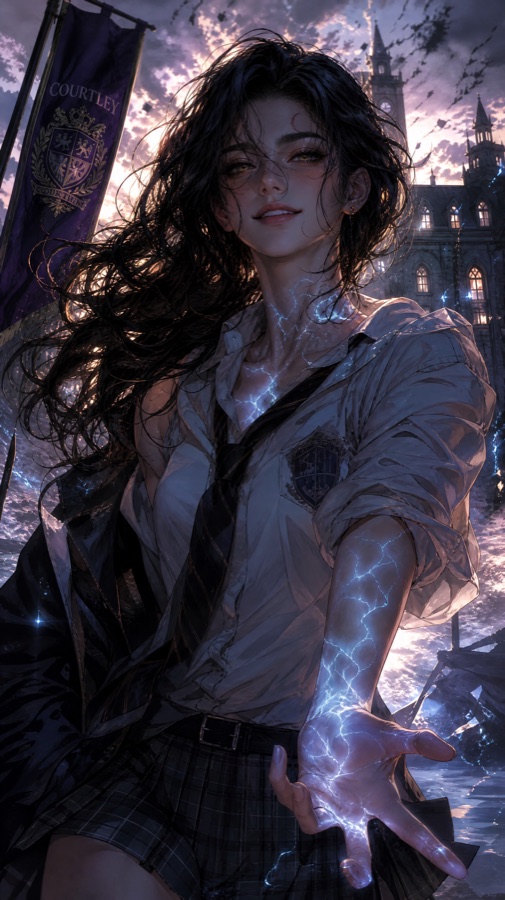
Chapter Twenty-One
Three weeks later, the story on every screen in the country was about a structural collapse at a decommissioned industrial site, blamed, officially, on decades of unmaintained infrastructure.
June knew better. So did the handful of names now scattered across an anonymous data leak that had somehow found its way into the hands of four separate investigative journalists in the same week, each of them convinced they'd stumbled onto the story alone.
Twenty-three years of files. Photographs. Termination orders signed in tidy, practiced handwriting. A woman named Corvid had spent four sleepless nights making certain nothing in that leak could ever be fully buried again, and when June asked her why she'd risked everything to do it, Corvid was quiet long enough that June thought she might not answer at all.
"I had a sister who asked one question too many, once," she said instead. "Nobody let her matter enough to be believed either." She shrugged, like the sentence cost her less than it clearly had. "Somebody needed to matter enough to be believed. Might as well be all of them, since she isn't here to be the only one anymore."
The Organization, at least the branch that had built a regional facility and authorized a Seven and spent decades quietly cleaning blood off a girl it had never once tried to save, did not survive the exposure. Arrests came, Director Voss's name among the first of them, and June never did learn whether the woman called it a defeat or simply another outcome to be filed correctly. Resignations came faster. For a while, the news called it one of the worst institutional scandals in the country's history, and June let herself feel, for exactly as long as that lasted, something almost like relief.
It didn't fill the hole where Ivy used to be.
Nothing did.
Her father moved back into the house quietly, without ceremony, the two of them relearning each other in small, careful pieces, the way you relearn a language you used to speak fluently as a child and have mostly forgotten since. He didn't try to explain away a decade of absence. She didn't ask him to. Some griefs were too large to apologize for and too necessary to forgive completely, and they were both, slowly, learning to hold that truth without it breaking either of them further.
"She'd have liked you," June told him once, on a night neither of them could sleep. "Properly, I mean. Not just as the reason she got to have a childhood at all."
Her father was quiet for a long moment.
"I'd like to believe that," he said. "I spent so long only ever seeing her from a distance. I never got to know if she'd have laughed at my jokes."
"She'd have laughed at everyone's jokes." June's voice caught, and she let it. "Even the bad ones. Especially the bad ones."
They sat together in the dark, and for the first time since the facility, June let herself cry without trying to be strong about it in front of anyone.
Magpie found her a month after that, on a bench outside the school neither of them had any real reason to be near anymore.
"I came to say I was wrong," Magpie said, not sitting, hands shoved deep in her coat pockets. "Not about my brother. Not about what she did, even by accident. But about her." She looked away, toward the ordinary students crossing the courtyard, oblivious to everything that had almost happened beneath the ground they were walking on. "She didn't get to choose what was living inside her any more than my brother chose to be built out of the leftovers of it. I spent three years hating the wrong kind of person for the right reason."
"Thank you," June said quietly, "for standing with her at the end."
"I didn't do it for her." Magpie's mouth twisted, something almost like a smile. "I did it because for one night, hating the Organization was finally a bigger feeling than hating what was left of my brother's murderer. Turns out that's easier to live with." She hesitated at the edge of the courtyard. "For what it's worth. She looked like she loved you enough to be worth all of it. I hope that matters, somewhere she can still hear it."
She left before June could answer, and June found, watching her go, that she hoped exactly the same thing.
It happened on an ordinary Tuesday, weeks into the quiet, while June was rinsing a mug at the kitchen sink and not thinking about anything in particular.
Six or seven notes, out of nowhere, sitting in the back of her own throat before she noticed she was making them.
She didn't recognize the tune. She'd never learned it, never owned a record with it on, couldn't have hummed it back a year ago if her life depended on it. But her mouth knew the shape of it perfectly, the way a body remembers a scar left by someone else's hands.
June stood very still at the sink, water running over a mug she'd stopped washing, and let herself cry over a song she'd never once been taught, because some part of her understood, without needing it explained, exactly whose it had always been.
The recovered files, once the initial leak settled, told them one more thing neither June nor Corvid nor Heron had been prepared for.
The regional facility, the Ashfall archive, Hallowell itself, all of it, every branch June had spent a season of her life tearing down piece by piece, was a single node in something far larger. Encrypted correspondence between "Sites" numbered well beyond twelve. References to "the Continuing Program" in language too calm and too old to belong to anything born recently.
They had won a battle in a war that had apparently been running for generations, in places June had never heard of, against threats she was only now beginning to understand existed at all.
"There will be others," Heron told her, the last time she saw him, folding away a laptop full of coordinates he refused to fully explain. "Other Ivys. Other files with other names on them, sitting in other basements in other cities, waiting for someone to finally go looking."
"Then somebody should go looking," June said.
Heron studied her for a long moment; something between doubt and reluctant respect.
"You sound like a woman who just started a promise she doesn't know how to finish yet."
"I've kept worse promises with less to go on," June said, and meant it, and understood, for the first time since the wreckage of that hallway, that grief and purpose were not mutually exclusive things to carry at the same time.
Somewhere very far from that quiet courtyard, in a country whose name meant nothing yet to anyone in this story, a boy no older than sixteen sat alone in his room, doing ordinary homework beneath an ordinary lamp, entirely unaware that his heart had just, for six seconds, stopped beating and started again on its own.
In an office with no windows, a phone rang once, twice, before a calm, unfamiliar voice picked up and listened to a single line relayed from an ocean away.
"We've finally found you."
Clearance Required
This one's still classified. Whatever happens next stays behind clearance until you've got the code.
The password lives in the newest post from — follow along and be first through the door.
Back to Index